Republican campaign committees are leaning into the final month of the 2026 midterm race with a combined cash reserve of roughly $1 billion. The money, largely supplied by the Trump‑aligned super‑PAC MAGA Inc., is being used to keep Senate contests competitive in states such as Texas, where President Trump is making a second‑week visit to support Sen. Ken Paxton.
Late‑stage spending and higher ad rates
MAGA Inc. reported about $416 million on hand at the end of August and began accelerating ad purchases in September. Because the group waited until the fall, it is paying substantially higher rates for television and streaming spots—sometimes more than five times the cost that early‑spring advertisers enjoyed. Four Republican Senate campaign officials confirmed that groups that booked air time last spring secured lower prices than MAGA Inc. and its affiliates are now paying.
For example, MAGA Inc. is being charged roughly $894 per airing on streaming platforms, while the Texas‑based super‑PAC Texas PAC—aligned with Senate Majority Leader John Thune—pays about $809 for a mix of broadcast and streaming. By contrast, a typical Republican campaign, such as that of Senate candidate Talarico, pays around $290 per airing.
Texas focus and high‑profile ads
In Texas, MAGA Inc. has poured more than $22 million into advertising over the past month, according to ad‑tracking firm AdImpact. Texas PAC has spent over $83 million, a staggering sum aimed at protecting what is usually a safe Republican seat. One notable ad featured Paxton’s estranged wife publicly endorsing the full Republican ticket and aired nationwide during a Dallas Cowboys‑Houston Texans football game.
Advertising costs can vary dramatically. During a recent football broadcast, Texas PAC paid $450,000 for a single spot in the Austin market, while Talarico’s campaign paid $50,000 for a comparable spot in the same market.
Strategic concerns from within the party
Veteran Republican pollster Neil Newhouse warned that the timing of the spending may blunt its impact. “A million dollars of advertising in October is a drop in the bucket,” he said, emphasizing that the most effective messaging occurs before Labor Day.
Senate Majority Leader Thune’s own group has begun scaling back in North Carolina, reflecting the broader challenge of allocating limited resources across a crowded Senate map. Outgoing Sen. Thom Tillis echoed the sentiment, noting that “in the last month, you pretty much have to place your bets.” He added, “If we have endless resources, then we should spend endlessly in every state. Absent endless resources, you’ve got to make data‑driven decisions about where you can win.”
National context and Democratic response
The midterms are the first national election since the Supreme Court lifted limits on coordinated spending by parties and candidates, opening the floodgates for even larger cash flows. Democrats acknowledge their financial disadvantage, relying on anti‑Trump sentiment and targeted messaging on issues such as corruption.
Democratic Senate leader Chuck Schumer warned that his party faces an “obscene” amount of spending from Republicans. He argued that money alone does not guarantee victory, pointing to past examples where well‑funded campaigns failed to win key races.
President Trump’s on‑the‑ground effort
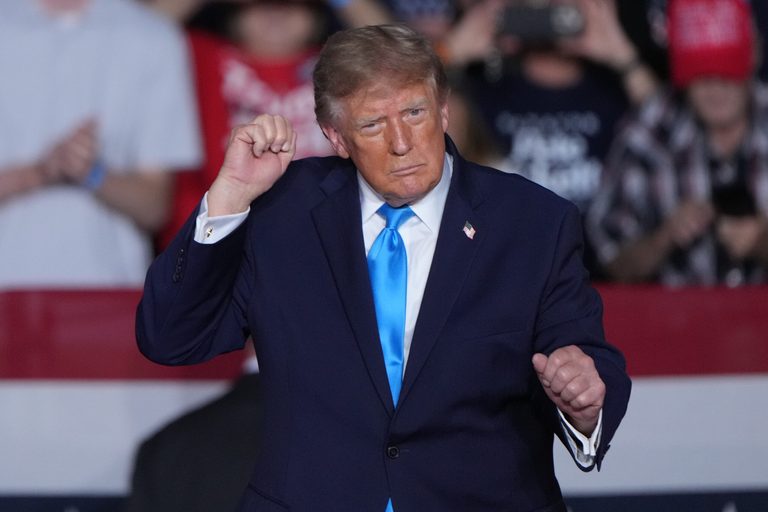
President Trump continues to energize the base with rallies in deep‑red locales. Recent events in Vandalia, Ohio, and a packed high‑school gym in Grand Island, Nebraska, showcased enthusiastic crowds. In Nebraska, Trump declared, “In a true way, I am running. We have to keep it going,” reinforcing his commitment to the party’s success despite the looming election.
As the campaign season tightens, Republican operatives hope that the $1 billion war chest, combined with President Trump’s personal outreach, will offset the late‑stage price hikes and keep the party’s Senate and House prospects alive.
Original reporting: Alexandria, VA News – WTOP News — read the source article.