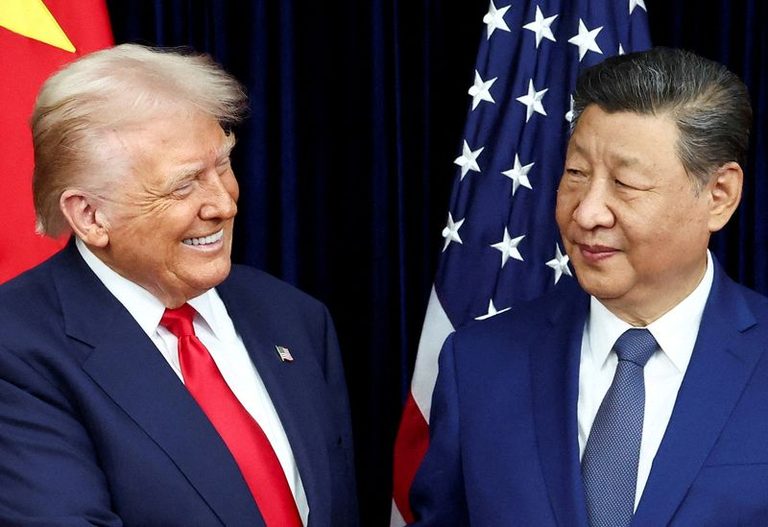
Washington – In a letter addressed to President Donald Trump, Rep. John Moolenaar, the Republican chair of the House Select Committee on China, called for a firm approach at the upcoming summit with Chinese President Xi Jinping. Moolenaar warned that any concessions could undermine U.S. security and urged the administration to tighten technology restrictions on China.
Letter stresses Chinese support for Iran as “act of war”
Moolenaar cited reports that Chinese entities provided targeting assistance for Iranian strikes that killed U.S. service members, describing the assistance as a “major escalation.” He wrote that enabling adversaries like Iran is “tantamount to an act of war against the United States and will be met with the most severe consequences.”
Calls for stricter AI and semiconductor controls
The chairman also urged the president to redouble efforts to prevent China from accessing American artificial‑intelligence technologies and semiconductor manufacturing equipment. He reiterated his view that China remains the United States’ “foremost foreign adversary and greatest external threat,” and that protecting critical tech supply chains is essential to national security.
Taiwan and regional security remain top concerns
China hardliners expressed worry that the Trump administration might soften U.S. support for democratically governed Taiwan, which Beijing claims as its own. Moolenaar said Chinese objections to U.S. arms sales and security cooperation with Taiwan should be “rejected out of hand.” He also demanded that the administration maintain pressure on Beijing over the detention of U.S. citizens, labeling the practice “hostage diplomacy.”
President Trump’s recent remarks on Taiwan
President Trump previously noted that Xi pressed him on U.S. arms sales to Taiwan during a May visit to Beijing. Trump later described a pending arms package worth up to $14 billion as a “negotiating chip” in the broader dialogue with China.
China’s diplomatic aims
Sources familiar with Chinese strategy say Beijing hopes to persuade the United States to publicly state opposition to Taiwan’s independence, rather than the longstanding U.S. position of not supporting independence while also not endorsing Beijing’s claim.
Any shift in U.S. policy on Taiwan would be highly controversial, raising questions about Washington’s resolve to defend the island and likely provoking strong opposition in Congress.
Trump’s response to Iran‑China allegations
On Sunday, President Trump dismissed reports that Iran obtained satellite imagery of a Jordanian base from Chinese entities before an attack that killed three U.S. troops in July. He said both China and the United States spy on each other, underscoring the ongoing intelligence rivalry.
The letter from Rep. Moolenaar reflects a broader sentiment among China hawks in Washington who fear that the summit could produce concessions that weaken America’s strategic position. By urging a tough line, the chairman hopes to ensure that the United States enters the talks with clear red lines and a commitment to protect its technological and security interests.
Original reporting: Appleton, WI News Feed (HLL/CB) — read the source article.