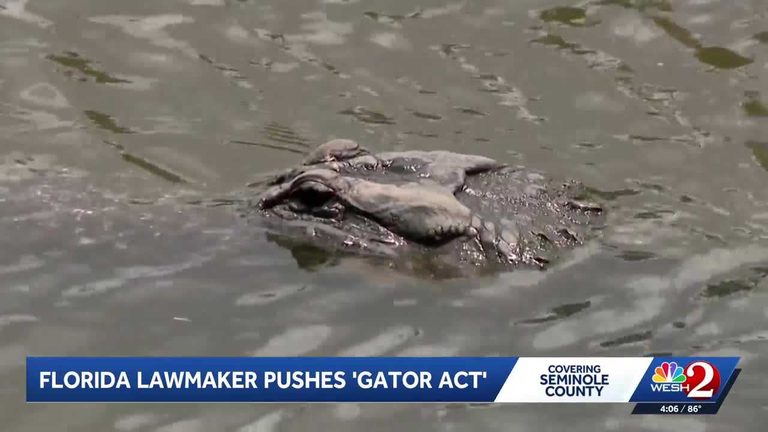
Seminole County residents are confronting a tragic reminder of Florida’s growing human‑wildlife interface. In June, Brittany Clark was fatally mauled by an alligator near the Barr Street Trailhead in the Little Big Econ State Forest. In response, U.S. Rep. Greg Steube (R‑FL) introduced legislation dubbed the “Gator Act,” which would direct a federal study to determine whether existing wildlife regulations hinder effective management of dangerous alligators on private property.
What the bill proposes
The proposed bill does not alter Florida’s current nuisance‑alligator program, which already allows for the removal of alligators deemed a threat to public safety. Instead, it calls for a comprehensive review of decades‑old federal designations that govern alligator habitats and management practices. The goal is to assess whether these historic rules are still appropriate in a state where development is rapidly expanding into natural areas.
Expert perspective
Conservation biologist Joe Wasilewski emphasized the need for updated policy. “We should revisit old wildlife laws that are more than 10, 20 years old because, absolutely, the world is changing,” he said. Wasilewski noted that Florida is home to roughly 1.3 million alligators, found in every county, and that there have been about 500 documented attacks on people since 1948, resulting in 32 fatalities.
He warned that rapid population growth—“a thousand a day, 500 a day,” according to his estimate—places increasing pressure on both humans and wildlife. “We want to be safe around these animals, but we also want to be able to respect their natural boundaries,” Wasilewski added.
Why a federal study matters
While state officials manage nuisance alligators, the federal study would examine whether national wildlife designations create obstacles for local authorities seeking to protect residents. The legislation reflects a broader concern that outdated regulations may not keep pace with the state’s expanding suburbs, new housing developments, and recreational use of waterways.
Local impact and next steps
For Seminole County families, the proposed study offers a chance to ensure that safety measures keep pace with growth. If the study finds that federal rules are indeed limiting effective local response, Congress could recommend changes that empower counties and municipalities to act more swiftly.
Rep. Steube’s bill is expected to move to committee hearings later this year. Stakeholders—including wildlife officials, property owners, and conservation groups—are likely to provide testimony on how current regulations affect day‑to‑day management of alligators near homes and public lands.
Community response
Local residents have expressed a mix of grief over Clark’s death and a desire for clearer guidance on coexistence with Florida’s iconic reptiles. Many hope that the “Gator Act” will lead to practical solutions that protect both people and the state’s abundant alligator population.
Original reporting: WESH Orlando — read the source article.