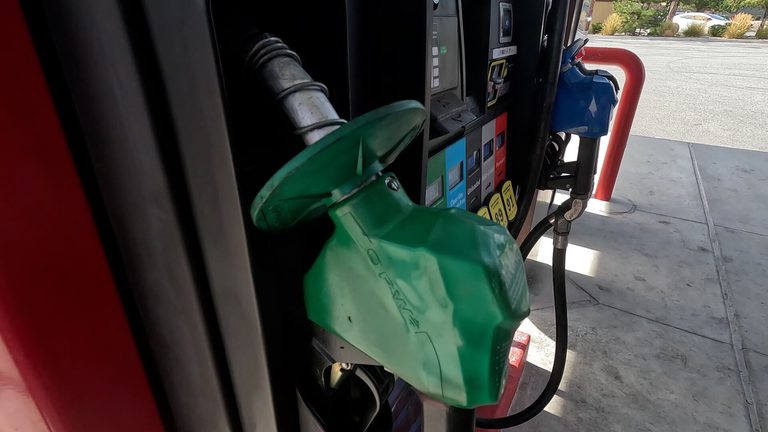
Reno drivers are feeling the pinch as diesel prices climbed to a record $7.04 per gallon on Sunday, according to the American Automobile Association. By Monday afternoon the price eased slightly to $7.01, but it remains well above the national average of $6.51 and the Nevada statewide average of $6.82.
Local truckers confront steep cost increases
Long‑time driver Ivan Ivone says a trip that once cost about $2,800 now approaches $4,000. “Where it used to cost $2,800 to come out here, now it’s closer to $4,000,” he told the outlet.
Owner‑operator Berdell Frank echoes the sentiment, noting that the high fuel cost is pushing his business into a net operating loss. “There are times when you operate in the business at, we call it NOL, net operating loss,” Frank explained, adding that the fuel expense can consume the entire margin on a load.
Impact on drivers’ personal lives
Beyond the balance sheet, the price surge is reshaping drivers’ personal plans. Frank says he will likely stay away from his hometown until November to preserve cash flow for a needed week off. “I’m not going to my hometown, probably till November, because I got to make sure my money’s good if I want to take, you know, enough time off,” he said.
Ivone admits he has already turned down jobs because the rates no longer cover the fuel surcharge. “I’ve had to turn down some [jobs] because the rates are not there,” he said, noting that even specialized hauls are being eroded by the higher cost.
Fuel surcharges ripple through the supply chain
The Nevada Trucking Association estimates that carriers are adding fuel surcharges ranging from 50 % to 90 % to offset the price spike. “Let’s say you’re going to charge $1,000 to move a truck full of groceries from point A to point B,” said association CEO Paul Enos. “When you add on that fuel surcharge at 90 %, you’re now going to be looking at $1,900.”
Those added costs travel downstream, affecting grocery stores, restaurants, and online shoppers. “At the grocery store, at the restaurant, anytime we’re buying a product on the internet, we’re going to see that increased cost, because transportation has now increased as well,” Enos added.
Root causes and broader context
Several factors are driving the Nevada fuel surge, including geopolitical tension from the war in Iran and the shutdown of a major refinery in California. While the national diesel average has set a record of $6.51, Nevada’s numbers remain higher, underscoring the regional impact of supply constraints.
Industry experts suggest that unless fuel prices retreat, many independent operators may be forced to reduce mileage, seek alternative routes, or even exit the market altogether. The long‑term health of Nevada’s trucking sector could hinge on how quickly the supply chain stabilizes and whether state policymakers consider measures to alleviate the burden on small carriers.
What drivers can do now
In the short term, drivers are looking to maximize efficiency, consolidate loads, and negotiate higher freight rates where possible. Some are also exploring partnerships with carriers that offer more favorable fuel surcharge structures.
For the broader community, the price spike serves as a reminder of how energy costs directly affect everyday expenses, from the price of a loaf of bread to the cost of a family dinner. As the market works toward equilibrium, Reno residents may see the ripple effects of today’s diesel prices in their local stores and on their wallets.
Original reporting: 2news.com — read the source article.