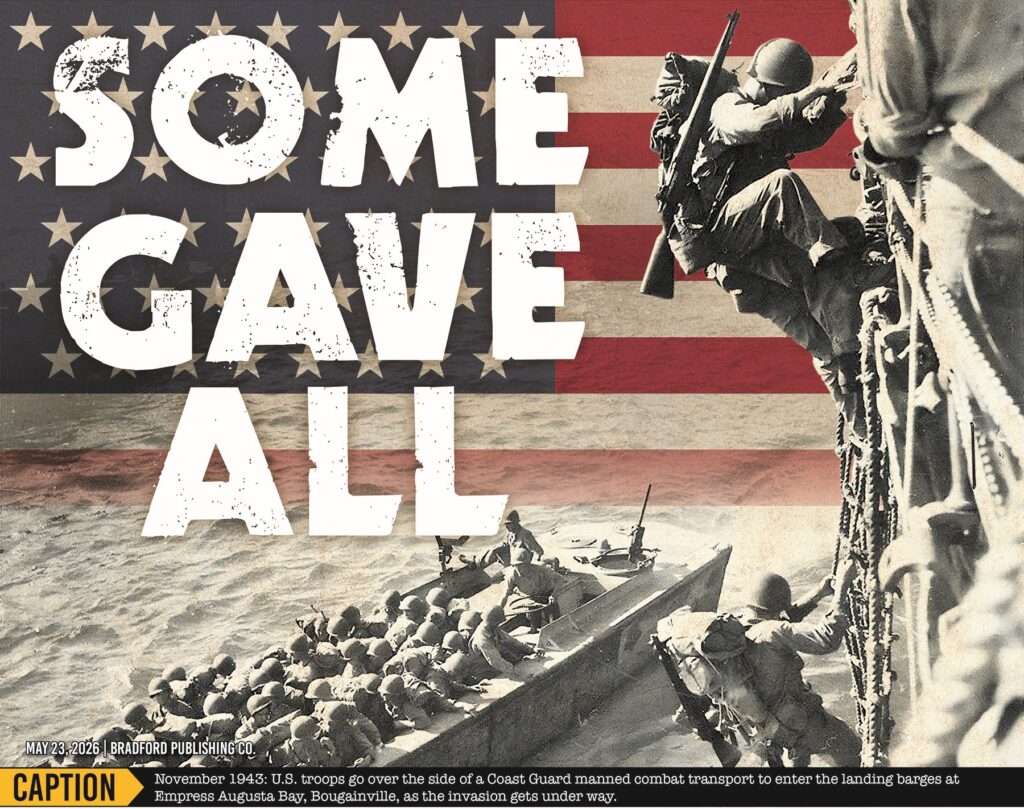
Inside today’s edition you’ll find “Some Gave All,” an annual special section that collects local stories of courage, sacrifice and service from communities across the United States. This package brings together first-person memories, ceremonial moments and the small details that turn loss into lasting honor. It’s a place where readers can meet the people behind the headlines and see how towns keep memory alive.
These pages center on families who learned to carry grief with pride, sharing quiet snapshots and loud salutes alike. Veterans’ names and faces appear alongside neighbors who stood watch at funerals, tended graves, or simply kept a memory alive with a flag on their porch. The tone is reverent but plain, because real tribute doesn’t need flourish — it needs honesty.
Reporters went out into parades and living rooms, to memorial parks and backyards, listening for the small, human things that make a life matter. They recorded voices that still choke up at a bugle, hands that smooth a uniform, and children who ask the hard questions about what service really cost. Those moments create a chain of continuity between generations and underscore why remembrance matters beyond a single day.
Photographs in the section capture faces and rituals: a folded flag in a veteran’s hands, a weathered marker at a cemetery, a family grouping beneath a wreath. Images are chosen to hold a breath in time, not to dramatize but to document. Together they map a pattern of loss, resilience and community response that repeats in towns and cities all over the country.
There’s also practical reporting here, on how local governments, veterans organizations and volunteer groups pitch in after a death. The stories explain how benefits are navigated, how memorials are funded, and how neighbors rally when paperwork and heartache collide. Those logistical threads are as much a part of honoring service as the ceremonies themselves.
Personal essays give the section its emotional heartbeat, with family members writing about ordinary routines that took on meaning after a loss. Readers will find accounts of breakfasts skipped and anniversaries observed, of friendships that turned into lifelines and small traditions that became tributes. These essays make the abstract cost of service concrete and relatable.
Many profiles focus on the continued service of surviving loved ones who transform grief into action, volunteering for veteran causes or starting local memorial projects. Those efforts widen the circle of remembrance and give younger people a living example of commitment. The work is grassroots and hands-on, and the stories show how much can grow from individual determination.
The special section also highlights ceremonies and public rituals that stitch a community together, from solemn remembrances to hometown parades. Organizers explain how they plan events, what traditions mean to them, and why the community shows up year after year. Those accounts reveal that civic memory is not automatic; it must be practiced and renewed.
For readers who want to participate, the reporting points to simple, meaningful ways to honor service without costing a lot: attend a memorial, listen to a veteran’s story, or volunteer with local support groups. Small acts compound into community strength, and the section shows how accessible that work can be. It’s an open invitation to turn respect into action in everyday life.
The collection avoids grandstanding and concentrates on the people who lived the consequences of service, the rituals that keep memory honest, and the quiet continuity that binds communities across the United States. Readers who turn these pages will find witness, instruction and space to reflect on what it means to remember.