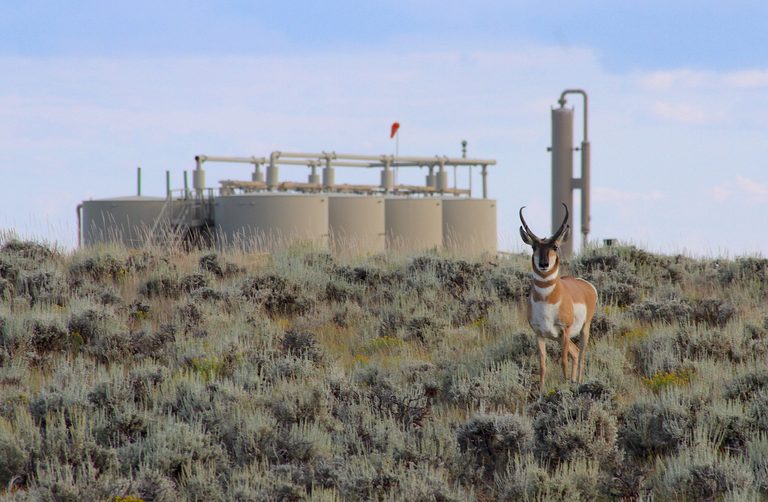
Wyoming wildlife officials are sounding the alarm after a wave of pronghorn deaths this summer. Between early August and mid‑September, seven GPS‑collared antelope from the Sublette Pronghorn Herd died, representing 14% of the tracked animals over six weeks.
Deaths traced to malnutrition
Brandon Scurlock, wildlife management coordinator for the Wyoming Game and Fish Department’s Pinedale Region, first noticed the loss when an old female, tagged PH143, was found dead along the receded shoreline of Big Sandy Reservoir. “It was a whole carcass,” Scurlock recalled, noting there were no signs of epizootic hemorrhagic disease, internal bleeding, or injury.
When the femur of the deceased doe was examined, the marrow was red and gelatinous rather than the firm, off‑white consistency seen in healthy animals – a clear sign of severe nutritional stress.
Non‑migratory animals hit hardest
All seven of the deceased pronghorn were non‑migratory, remaining on the winter range year‑round. “I think that’s a poor strategy this year: To basically live all year on the winter range,” Scurlock said. In the Sublette Herd, about 88% of the population normally migrates or roams nomadically, while only 12% stays in one spot.
The static animals were forced to rely on low‑elevation vegetation that has been devastated by the summer’s heat and drought. Surveyors observed up to 90% die‑off of bitterbrush shrubs – a critical winter browse species – in the Prospect Mountains near Big Sandy. Fresh growth on surviving plants measured just over a quarter inch, roughly 10% of typical summer growth.
Broader environmental impacts
Wyoming’s record‑setting warm winter followed by an unprecedented late‑summer heat wave left plant growth bleak across the region. While elk have benefited from the milder winter, the overall ecosystem has suffered. Wildfires burned more than 63,200 acres through late September, a fraction of the 810,000 acres burned in 2024 and 250,000 acres in 2025.
Despite the harsh conditions, disease outbreaks have been limited. Deputy Chief of Wildlife Martin Hicks reported only a single case of epizootic hemorrhagic disease southeast of Lander, far fewer than expected given the drought.
Signs of resilience
Even amid the challenges, biologists noted encouraging reproductive data. Surveys recorded more than 60 fawns per 100 does, surpassing the five‑year average. “If you would make me wager a bet, I would have lost that bet,” Hicks said, surprised by the strong fawn production.
In the Green River Basin, migratory mule deer appear plump and healthy, though officials warn that limited forage this winter could strain them.
What’s next for Wyoming’s pronghorn?
State wildlife officials plan to continue monitoring the herd and to assess habitat restoration options for the bitterbrush and other browse plants. The goal is to improve winter range quality and reduce the reliance of non‑migratory individuals on increasingly scarce resources.
“We need to address the underlying habitat issues,” Scurlock emphasized, urging continued vigilance as the state moves into the colder months.
Original reporting: Oil City News (Casper WY) — read the source article.