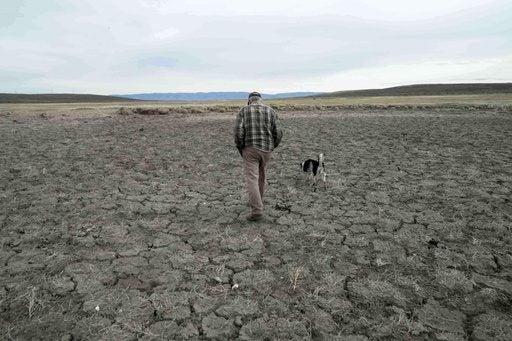
Drought across the contiguous United States has reached unusually severe levels for this time of year, with recent monitoring showing more than 61% of the Lower 48 in conditions ranging from moderate to exceptional. The Southeast is especially hard hit, with roughly 97% in drought, and about two-thirds of the West also affected. According to long-term drought records, this is the highest extent of drought seen in spring since systematic tracking began in 2000. Another national index that measures long-term dry conditions, the Palmer Drought Severity Index, registered its highest March value since records began in 1895 and made last month the third-driest month on record overall, behind only July and August 1934.
Forecasters point to a combination of record warmth and weak winter storms as key drivers. Much of the West experienced very low snowpack during the early months of the year, reducing the region’s usual natural reservoir that feeds rivers and reservoirs through summer. At the same time, a persistent jet stream pattern has steered storms northward, leaving a separate but overlapping drought stretching from Texas across the Southeast. Federal calculations indicate eastern Texas would need roughly 19 inches of rain in a single month to erase its deficit, while most of the Southeast would require more than a foot of rainfall to return to normal moisture levels.
One technical measure that helps explain how extreme conditions feel on the ground is vapor pressure deficit, which captures how strongly dry, hot air pulls moisture out of soil and plants. In the West this measurement has been far above normal — about 77% higher than typical and over 25% above the previous January–March record — magnifying stress on vegetation and raising concern about rapid fuel drying ahead of the fire season. Scientists warn that drought impacts are likely to worsen once summer heat arrives, because fires and drought responses intensify disproportionately as temperatures climb.
On the ground, early-season signs of stress are appearing: some desert plants are blooming earlier than usual, and water managers are uneasy about storage levels in key reservoirs supplied by the Colorado River. Those who depend on western water systems are watching negotiations and reservoir numbers closely, as multiple reservoirs remain below capacity going into a potentially critical summer. The combination of depleted reserves and limited runoff heightens the risk to communities, agriculture and ecosystems.
Beyond wildfires and water supplies, agricultural impacts are a major concern because a poor U.S. crop year could ripple into higher food prices globally. Forecasters also note a strong El Niño is likely this year, which can reduce yields in other parts of the world and compound supply pressures. Researchers emphasize that both natural variability and human-driven climate warming are playing roles: climate change has increased the odds and intensity of extreme heat and drought, even as random weather patterns also influence where and when those extremes occur.