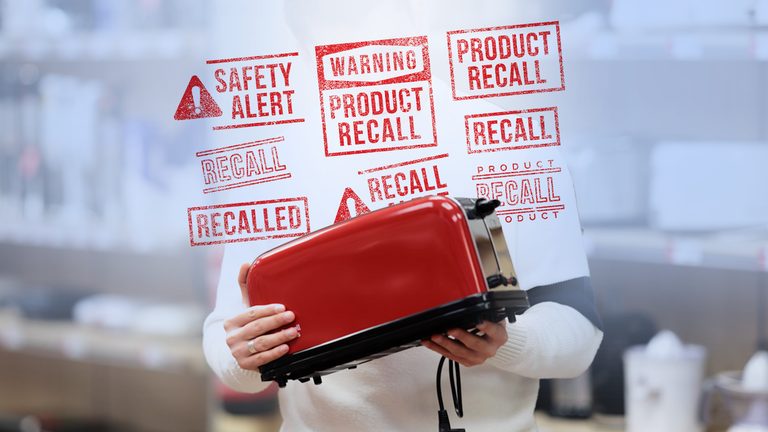
From online marketplaces to thrift stores, recalled products can quietly resurface years later — turning a bargain into a hidden safety risk. That toy from a thrift store, that mini fridge at a garage sale, or the bargain on Facebook Marketplace might look perfectly safe, but it could have been recalled.
Checking for Recalls
A recalled product does not always disappear. Some recalled products remain in homes for years before they are donated, passed down, or sold secondhand. Someone selling a recalled product may not even know it has been recalled. To check if a product has been recalled, find the product’s brand, model number, product name, and serial number, if available, and then search that information at CPSC.gov/Recalls.
A recall notice will tell you which models are affected, why the product was recalled, the safety hazard, whether you should stop using it, and whether you are eligible for a repair, replacement, or refund. When buying online or secondhand, ask for the make and model number. Some recalls apply only to specific models, not every version of a product.
High-Risk Categories
Any consumer product can be recalled, but experts say these categories deserve extra attention before you buy secondhand or accept a hand-me-down: children’s products, furniture, battery-powered electronics, and household appliances.
Children’s products, including toys, infant sleep products, and children’s clothing, account for more than one-fourth of the recalls analyzed in the latest report by the U.S. PIRG Education Fund, a nonprofit consumer advocacy organization focused on product safety and consumer protection.
Furniture, such as dressers, bookcases, and other clothing storage units, can tip over and cause serious injuries. Battery-powered electronics, including power banks, portable chargers, and other rechargeable electronics, can overheat, catch fire, or explode. Household appliances, including air fryers, coffee makers, and pressure cookers, can pose fire, burn, and electrical hazards.
Registration and Reporting
Registering your products with the manufacturer after you buy them can help ensure you receive recall notices. Registration usually takes less than a minute and is especially important for baby gear, car seats, appliances, electronics, and vehicles.
If you learn a product has been recalled, stop using it, read the recall notice carefully, and contact the manufacturer to see whether you are eligible for a repair, replacement, or refund. Do not donate, sell, or give the product to someone else. If you spot a dangerous product, report it at SaferProducts.gov.
Original reporting: WPBF West Palm Beach — read the source article.