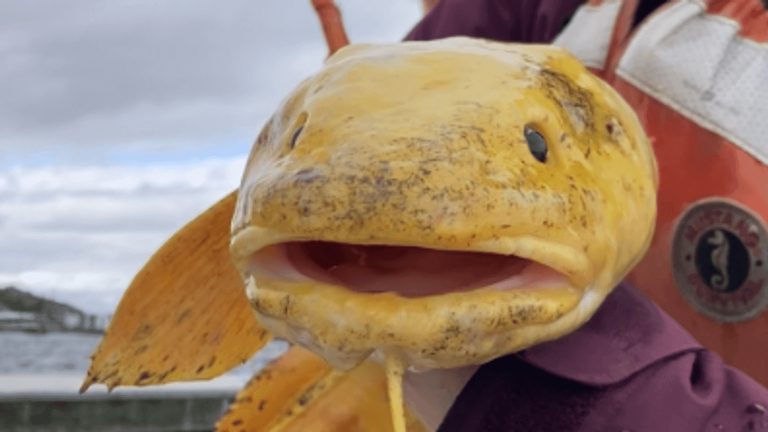
Oswego, NY — During a routine aquatic invasive species survey last month, biologists from the U.S. Fish and Wildlife Service captured a burbot displaying a striking yellow‑orange hue. The unusual coloration is the result of xanthochromism, a rare genetic mutation that suppresses normal pigmentation.
Why the find matters
Xanthochromism is far less common in wild fish than albinism or melanism, making this discovery noteworthy for scientists and local anglers alike. The fish also underscores concerns about the overall health of burbot populations in Lake Ontario, which have been reported as extremely low.
Burbot typically inhabit deeper, cooler waters. Finding one in the relatively shallow and warmer waters of Oswego Harbor is unusual and suggests that the species may be exploring new habitats as their numbers dwindle.
Health assessment and next steps
U.S. Geological Survey researchers noted that the captured burbot was severely underweight and appeared to be in poor health. To determine the cause of its condition, the fish was sent to Cornell University’s College of Veterinary Medicine for a detailed health analysis.
Officials hope the examination will provide insight into the broader health of burbot throughout the Great Lakes basin and help guide future conservation efforts.
Early‑detection program proves its worth
The discovery highlights the success of the Aquatic Invasive Species Early Detection and Monitoring Program, which employs electrofishing, specialized nets, and environmental DNA analysis to monitor Great Lakes waterways. While burbot are native to the region, the program’s ability to locate an unusually rare specimen demonstrates its potential to identify invasive species before they become widespread.
“Finding this rare, genetically distinct fish during a routine survey shows that our early‑detection tools are working as intended,” said a spokesperson for the U.S. Fish and Wildlife Service. “It reinforces the importance of continued monitoring to protect both native and invasive species in our waters.”
Local relevance
Oswego residents and anglers have long reported occasional burbot catches in the harbor, but this is the first documented capture during an official fisheries survey. The find may encourage local fishermen to stay vigilant and report unusual catches, contributing to a community‑wide effort to monitor waterway health.
As the Great Lakes continue to face environmental pressures, such collaborative monitoring efforts between federal agencies, state partners, and local stakeholders remain essential for preserving the region’s aquatic ecosystems.
Original reporting: CBS 6 WRGB Albany (local) — read the source article.