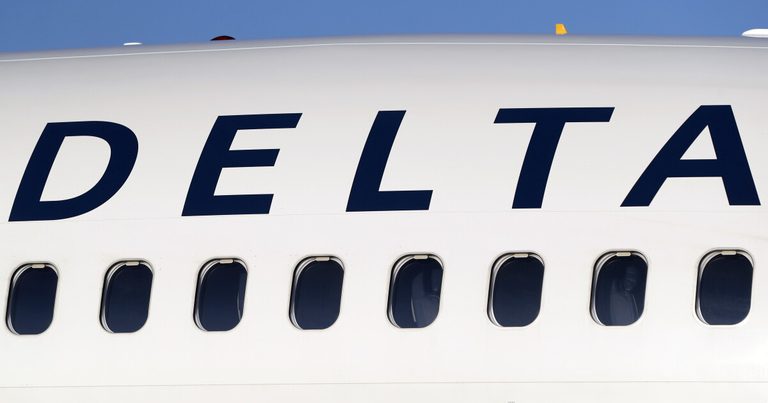
Travelers on Delta Flight 1660 experienced an unexpected change of plans Monday evening when the aircraft, a Boeing 737‑900, was diverted from its scheduled route between Kansas City International Airport (MCI) and Atlanta’s Hartsfield‑Jackson International Airport.
Mechanical indication prompts diversion
Shortly after the flight departed Kansas City just after 5:30 p.m., the crew reported a mechanical indication in the cockpit while cruising over Missouri. Following standard safety protocols, the pilots requested priority landing at the nearest suitable airport, St. Louis Lambert International Airport (STL).
Safe landing and continued travel
The aircraft touched down at St. Louis around 7:20 p.m. without incident. Passengers were briefed on the situation and, according to a Delta spokesperson, were re‑boarded onto a different aircraft later that evening to complete their journey to Atlanta.
Impact on passengers
While the diversion added several hours to the original travel schedule, Delta emphasized that safety remained the top priority and that all 175 occupants were unharmed. The airline also noted that it worked to minimize inconvenience by arranging alternate transportation promptly.
What travelers should know
Passengers affected by the diversion were advised to check their email or the airline’s mobile app for updated flight information. Those with connecting flights or time‑sensitive plans were encouraged to contact Delta’s customer service for assistance.
Broader context
Flight diversions due to mechanical issues, though relatively rare, are part of standard aviation safety procedures. Airlines are required to prioritize passenger safety over schedule adherence, and pilots are trained to make rapid decisions when an aircraft’s systems indicate a potential problem.
Delta’s response aligns with industry best practices, ensuring that passengers reach their final destinations safely, even when unexpected technical challenges arise.
Original reporting: KSHB 41 Kansas City (local) — read the source article.