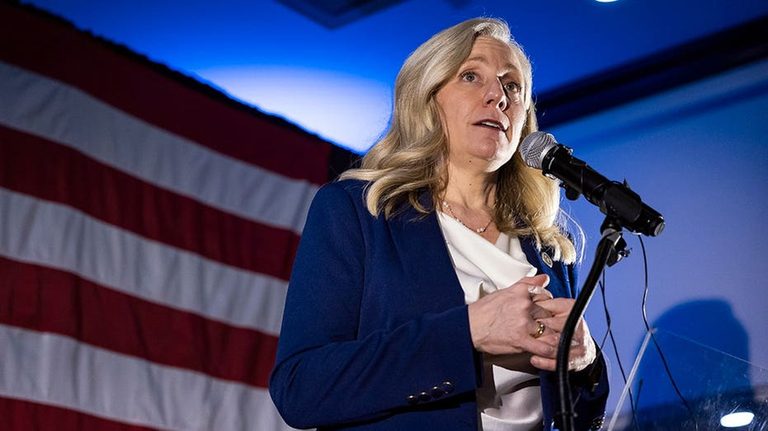
Virginia residents and Republican lawmakers are demanding answers from Governor Abigail Spanberger after a series of voting‑rights restoration letters were sent to recipients who either do not exist or are still incarcerated. The latest mistake involved a letter addressed to “Kayla Renae Vaughn,” a woman serving a 40‑year sentence at the Central Virginia Correctional Unit.
Letters sent to the dead and the living
According to documents obtained by Fox News Digital from the Republican minority caucus in the Virginia House of Delegates, the governor’s office mailed a restoration notice to Vaughn, who remains behind bars on a felony drug conviction. The letter, signed by Governor Spanberger and Secretary of the Commonwealth Candi Mundon‑King, claimed a “completed review of the particulars of [Vaughn’s] case,” despite the fact that the state amendment approved by voters on Nov. 3 expressly excludes people still serving a felony sentence.
Vaughn was convicted in May 2023 for manufacturing and distributing Schedule I or II drugs and was sentenced in January 2025. She has no known connection to the anonymous resident who received the letter, and the Virginia Department of Corrections confirmed it had received the request but offered no further comment.
Previous blunders raise questions
The controversy follows earlier mishaps, including a letter sent to a deceased dog named “Biscuit Rigsby” in Goochland County and another addressed to “Betty No Last Name” at a sheriff’s office in Hampton Roads. These errors have drawn sharp criticism from Republican leaders.
House Minority Leader Terry Kilgore said, “Restoring the rights of the dead is a failure. Restoring the rights of a dog is an embarrassment.” He added that extending restoration to someone still incarcerated would represent a “new level of carelessness” and urged the governor to provide answers promptly.
Republican perspective on the restoration process
Delegate Tom Garrett, R‑Buckingham, who first alerted the caucus to the Vaughn letter, argued that the governor’s office is ignoring a Virginia Supreme Court ruling that requires individual review of each restoration request. Garrett cited a lawsuit filed by former House Speaker Bill Howell challenging a prior blanket restoration order by former Gov. Terry McAuliffe.
“Look at the letters coming out of Governor Spanberger’s office. Every one of them claims the administration ‘reviewed the particulars of your individual case,’” Garrett said, referencing the dog‑letter as an example of the gap between the office’s statements and reality.
Governor’s stated goals versus the reality
Spanberger has described her restoration program as a way to give dignity to “people who had previously been convicted of a felony, had served their time, returned home, and simply wanted the dignity of being able to fully participate in our democracy.” Critics note that Vaughn’s situation does not fit that description, as she remains incarcerated.
The voter‑rights amendment approved by Virginians in November limits automatic restoration to individuals who have been released from incarceration. It also excludes those who “do not understand the act of voting,” a provision aimed at protecting the integrity of the electoral process.
What comes next?
Republican leaders are pressing the governor’s office for a full explanation of how these letters were generated and why the office failed to verify recipient eligibility. The controversy underscores ongoing partisan tension in Virginia over how voting‑rights restoration should be administered.
As the debate continues, Virginia voters and officials alike will be watching to see whether the administration can correct these errors and align its practices with the constitutional intent of the recent amendment.
Original reporting: Fox News (HLL/CB) — read the source article.