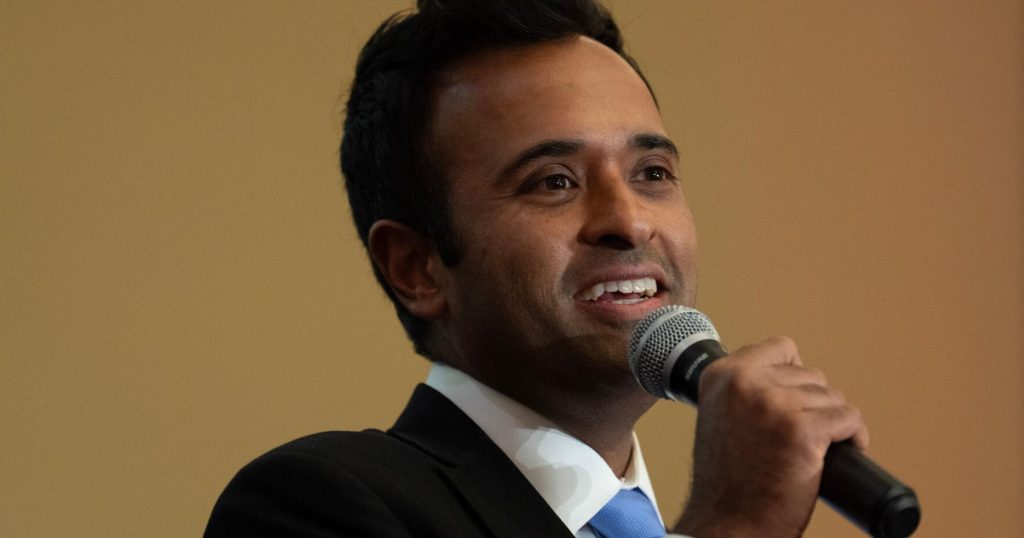

On May 19 in Ohio, Republican nominee for governor Vivek Ramaswamy laid out how he would tackle Medicaid fraud and trim wasteful spending if voters hand him the keys to the statehouse. Ramaswamy pitched a plan that leans on tougher oversight, accountability measures, and smarter audits aimed at protecting taxpayers and patients. His Democratic opponent pushed back with criticism, framing the proposal as risky for vulnerable residents. The exchange highlights a central contrast in the campaign over fiscal responsibility and public health priorities in Ohio.
Ramaswamy’s message was straightforward: protect Medicaid as a safety net, but stop letting it be siphoned off by fraud or bloated spending. He argued that too much of the program’s dollars drift toward administrative waste or fraudulent claims instead of care for the people who need it. From a Republican perspective, that is both a moral and practical problem—morally because taxpayers deserve honest stewardship of public funds, and practically because cleaner budgets mean better services for those who rely on Medicaid.
He proposed beefing up audits and creating sharper penalties for bad actors, with an emphasis on technology to spot suspicious billing patterns earlier. The idea is simple: use data-driven tools and clearer accountability to make fraud harder and recovery faster. Ramaswamy framed this as common-sense reform, not an attack on recipients, insisting the goal is to make sure every Medicaid dollar goes to care, not to fraud schemes or inefficient bureaucratic spending.
Critics, including his Democratic opponent, warned these moves could create barriers for the sick and elderly who depend on Medicaid. They worry that aggressive crackdowns might slow payments, complicate access to providers, or let red tape interfere with care. From Ramaswamy’s camp, those concerns can be met head-on with targeted safeguards that protect access while still rooting out abuse, a balance his team says is essential for long-term program stability.
Beyond enforcement, Ramaswamy talked about trimming wasteful spending more broadly by scrutinizing contracts, streamlining administrative layers, and ending redundant programs that overlap with Medicaid services. That approach reflects a Republican view that government should operate efficiently and tax dollars should be stretched to serve more people effectively. He tied this to economic messaging: a leaner, cleaner Medicaid system reduces pressure on state budgets and helps avoid future tax hikes.
Ramaswamy also emphasized transparency. He called for public reporting on audit results and clearer lines showing where every Medicaid dollar goes. Transparency is pitched not just as a tool for accountability but as a way to rebuild trust between citizens and government. The argument is that when taxpayers can see results and leaders can point to improvements, it strengthens both civic confidence and the political case for protecting valuable programs.
For Ohio voters, the debate comes down to choices about priorities and methods. Do you favor aggressive reforms now to safeguard the program’s future, or do you worry reforms could unintentionally harm those who depend on Medicaid today? Ramaswamy is betting many Ohioans will back a message that insists on protecting services by stopping fraud and waste before it erodes the system. His team frames the push as pragmatic conservatism: protect people by protecting the program’s integrity.
Campaign dynamics will determine how persuasive that message is at the ballot box. The Democratic critique aims to make enforcement sound punitive rather than protective, while Ramaswamy’s camp will keep pointing to audits, recovered funds, and streamlined operations as proof of concept. As the campaign moves forward, the clash over Medicaid will be a clear signal of which vision of government Ohio voters prefer: one focused on tighter stewardship and transparency, or one prioritizing immediate protections against any risk of disruption to care.