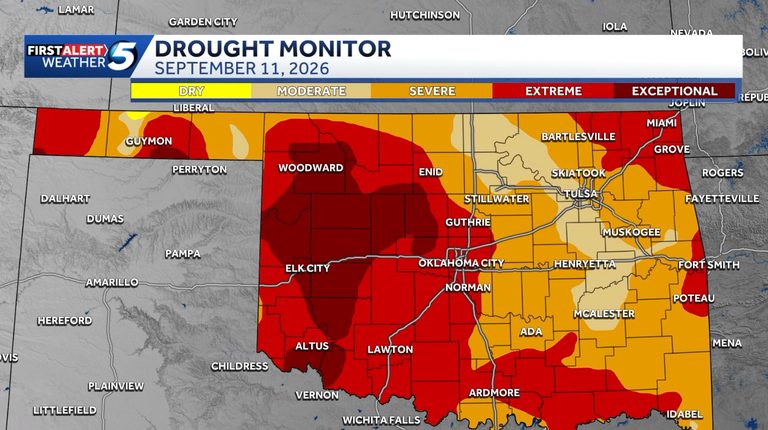
Rainfall this week gave a welcome boost to several Oklahoma communities, but the broader drought picture has changed little. The Oklahoma Mesonet recorded more than two inches of rain in Newkirk, about 1.6 inches in Bessie, just under 1.5 inches in Cheyenne, and between one and two inches across several locations in southern Oklahoma, including Sulphur.
Rainfall benefits limited to pockets
While those totals represent a significant short‑term gain for the areas that received them, much of the state – especially the Oklahoma City metropolitan area south of Edmond – saw little or no precipitation. Comparing the new measurements to the U.S. Drought Monitor shows that the rain softened conditions in isolated pockets of severe and extreme drought, but it did not shift any region out of the exceptional drought category.
What the drought levels mean for residents
Oklahoma’s drought classification system outlines the practical impacts at each level. Level 2 severe drought can trigger burn bans, stressed cattle, stunted pasture growth, slow refilling of spring‑fed ponds, and wilting trees. Level 3 extreme drought adds poor air quality, declining bird populations, low lake levels that hinder fishing and boating, and a heightened risk of wildfires. At Level 4 exceptional drought, the situation worsens dramatically: widespread burn restrictions, herd liquidations because of soaring hay and water costs, financial strain on rural fire departments, cracked soil, failed crops, and mandatory water restrictions due to broken water lines.
Local officials and experts weigh in
“We’ve been through droughts before, but it doesn’t mean it is easy, and we are already experiencing many of those impacts,” said KOCO‑5 field meteorologist Michael Armstrong. He cautioned that while the recent rain is a positive sign, it will take weeks and months for the state to recover from the current water deficit.
Looking ahead
Forecasters see additional chances for rain in the coming weeks, but the consensus is that a single storm cannot erase months of below‑average precipitation. Residents are encouraged to continue water‑conservation practices, monitor local burn‑ban notices, and stay informed about any new water‑restriction orders that may be issued by municipal authorities.
How communities are responding
In areas still under severe or exceptional drought, farmers and ranchers are adjusting grazing plans, seeking supplemental feed, and exploring drought‑resilient crop varieties. Rural fire departments are budgeting for higher operational costs, and city officials are reviewing water‑usage policies to ensure essential services remain uninterrupted.
Overall, the recent showers provide a modest reprieve, but Oklahoma’s broader drought challenges persist. Continued vigilance and community cooperation will be essential as the state works toward restoring more stable water conditions.
Original reporting: Oklahoma City News Feed (HLL/CB) — read the source article.