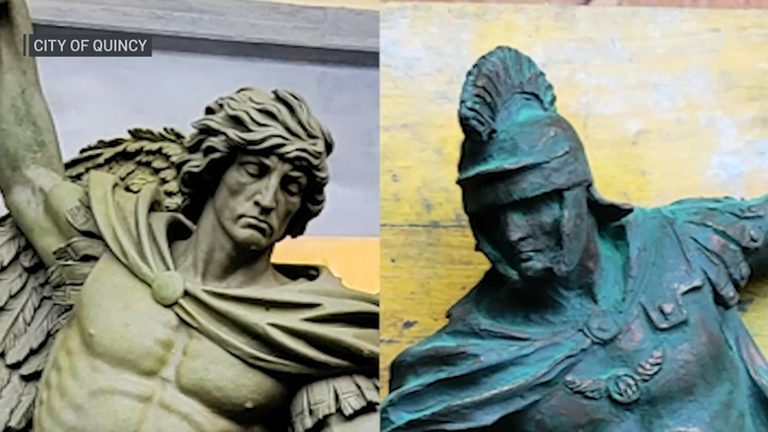
Quincy, Mass. – On Thursday the Massachusetts Supreme Judicial Court denied the city’s motion to dismiss a lawsuit filed by local taxpayers, backed by the American Civil Liberties Union of Massachusetts. The case challenges the city’s plan to install statues of St. Michael the Archangel and St. Florian on the façade of the $170 million Quincy Public Safety Headquarters.
Court’s reasoning
Justice Scott Kafker wrote that the plaintiffs have shown a “reasonable likelihood” that the city has violated important constitutional rights by using taxpayer money for religious symbols on a government building. The court upheld a lower‑court order that bars the city from placing the statues while the lawsuit proceeds.
City’s position
Quincy officials argue the statues honor the city’s police and fire personnel. “Quincy’s firefighters and police put their lives on the line for this city every day, and these statues were chosen to honor their bravery, service, and sacrifice,” the city said in a statement. The city called the ruling “disappointing” but said it will continue to pursue the ability to commemorate first responders within the bounds of the law.
Legal representation
Joe Davis, senior counsel at the religious‑liberty advocacy group Becket, noted that the case will continue. “The City should not have to hide public art simply because some people may think of religion when they see it,” he said.
Plaintiffs’ perspective
The lawsuit was brought by Quincy residents who contend that spending hundreds of thousands of dollars on overtly religious statuary on a public building is contrary to the First Amendment. David Reich, speaking for the plaintiffs, called the decision a “landmark ruling” that challenges what he described as an “un‑American idea” of government‑funded religious displays.
Background
The dispute began when the city commissioned the two statues for the new public safety headquarters. The case was first heard in Norfolk Superior Court before Judge William Sullivan, who is also presiding over the high‑profile Lindsay Clancy murder trial.
What’s next?
The lawsuit will move forward, and the city must keep the statues off the building’s façade until the court reaches a final decision. Both sides have indicated they will continue to argue the merits of the case, which sits at the intersection of municipal art projects, religious expression, and constitutional law.
Original reporting: NBC10 Boston — read the source article.