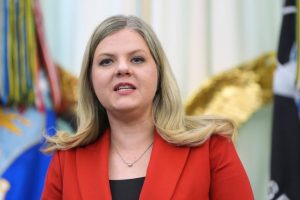
TORONTO — In a statement to the press on Tuesday, Paul St‑Pierre Plamondon, leader of the Parti Québécois, said his party would not schedule a referendum on Quebec’s independence until after U.S. President Donald Trump leaves office. The party, which is currently out of power but could win the province’s next election due by October 5, says a future PQ government would still hold a vote during its first term, but not before January 20, 2029, when Trump’s term ends.
Reasoning behind the delay
St‑Pierre Plamondon argued that a question as consequential as Quebec’s future requires a “clear and calm debate” free from the turbulence of American politics. “It must not be hijacked by the upheavals of American politics, nor by the outbursts of an unpredictable president, nor by fear campaigns,” he said. He added that the “unpredictability of the American administration will harm our process as well as the quality of the debate on our future as a nation.”
U.S. policies influencing the conversation
Trump’s recent tariffs on Canadian goods and his repeated statements about making Canada the 51st U.S. state have complicated the separatist case in Quebec. Those moves have spurred a surge of Canadian nationalism, prompting many French‑speaking Quebecers to view remaining in Canada as a more secure option.
Broader separatist sentiment in Canada
The separatist discussion is not limited to Quebec. In Alberta, voters will decide on October 19 whether the province should take steps toward a binding referendum on leaving Canada. Both Quebec and Alberta face significant hurdles to any independence vote, especially as U.S. trade measures and rhetoric bolster arguments for staying within the Canadian federation.
Historical context
Quebec has twice rejected sovereignty, most recently by a razor‑thin margin in the 1995 referendum. The province, home to about 9.1 million people and roughly 80 % French‑speaking, already enjoys considerable autonomy. It collects its own income tax, runs immigration policies that favor French speakers, and enforces laws giving French priority over English.
The Parti Québécois was founded in the 1960s under René Lévesque and has long pursued an independent Quebec. The party has governed the province several times without holding a referendum, including its most recent stint from 2012 to 2014. Quebec’s identity has been a point of contention since the British takeover of New France in the 1760s.
What’s next?
While the PQ’s postponement does not rule out a future vote, it signals a strategic decision to wait for a more stable international environment. The party’s stance underscores how external political forces, even those far from Canadian borders, can shape domestic debates about self‑determination and constitutional change.
Original reporting: Alexandria, VA News – WTOP News — read the source article.