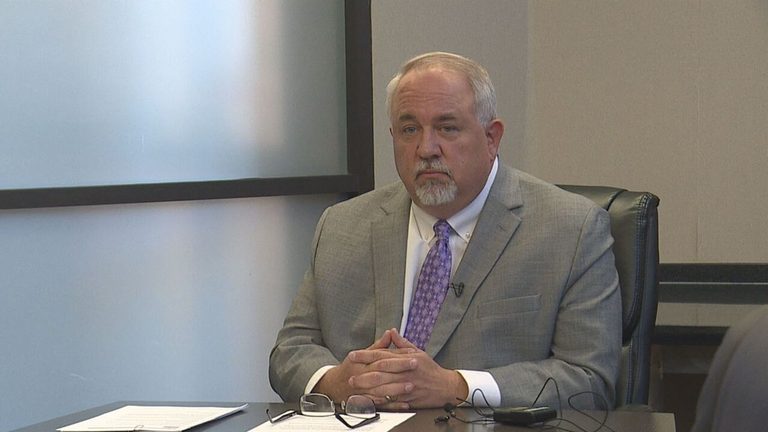
Little Rock, Ark. – The upcoming Pulaski County judge race has turned into a debate over how the county should handle the growing presence of data centers, including the AVAIO facility slated for construction near Wrightsville. Republican nominee Michael Rushin used a Monday press briefing to unveil his own framework, arguing that local officials lack the expertise to craft effective regulation.
Rushin’s alternative plan
Rushin told reporters, “It is our firm belief that no local government is sophisticated enough to know what is right, what the right measure or balance is in terms of regulation or conversation at this point.” He said he has already submitted a detailed plan to the Pulaski County quorum court that would, in his view, protect residents and ratepayers without resorting to litigation.
“Protecting the interests of Pulaski County residents, ratepayers, without going to court should not be difficult, and with the plan I have submitted to the quorum court, it will not be,” Rushin added. He emphasized that any money spent on lawsuits would be better directed toward fixing county roads and other infrastructure.
Griffen backs the vetoed ordinance
Democratic nominee Wendell Griffen, who defeated incumbent Judge Barry Hyde in the March primary, supports the ordinance that Hyde vetoed in September. The measure would create new permitting processes for data centers, aiming to give the county more oversight of projects like AVAIO.
Griffen explained, “It only takes nine Justices of the Peace to override the veto—when that happens, the law will be effective immediately.” He argues that the ordinance provides necessary safeguards against unchecked development.
Veto, quorum court and the upcoming vote
Judge Barry Hyde’s veto was praised by Rushin, who called it “a very wise decision” because it avoids potential court battles. “My opponent only knows litigation, that’s what he’s done for his career,” Rushin said, positioning himself as the candidate who will keep the county out of costly legal disputes.
The quorum court is scheduled to meet Tuesday night to decide whether the county’s Justices of the Peace will override Hyde’s veto. If the veto is upheld, the ordinance will not take effect; if it is overridden, the new permitting rules could clash with Rushin’s proposed framework should he win the November election.
What’s at stake for voters
Both candidates frame the issue as one of fiscal responsibility and local control. Rushin warns that an ordinance could create “a pretty big headache” and lead to years of litigation, while Griffen contends that oversight is essential to protect residents from unchecked data‑center expansion.
County residents will ultimately decide in November whether they prefer a hands‑off approach that relies on private‑sector expertise, as advocated by Rushin, or a more regulated path championed by Griffen. The outcome will shape how Pulaski County balances economic development with the protection of taxpayers and infrastructure.
Looking ahead
Regardless of the quorum court’s decision, the data‑center debate is set to remain a central issue in the November ballot. Voters are encouraged to review each candidate’s plan and consider how data‑center growth could impact road maintenance, public services, and the county’s long‑term fiscal health.
Original reporting: KATV Little Rock (local) — read the source article.