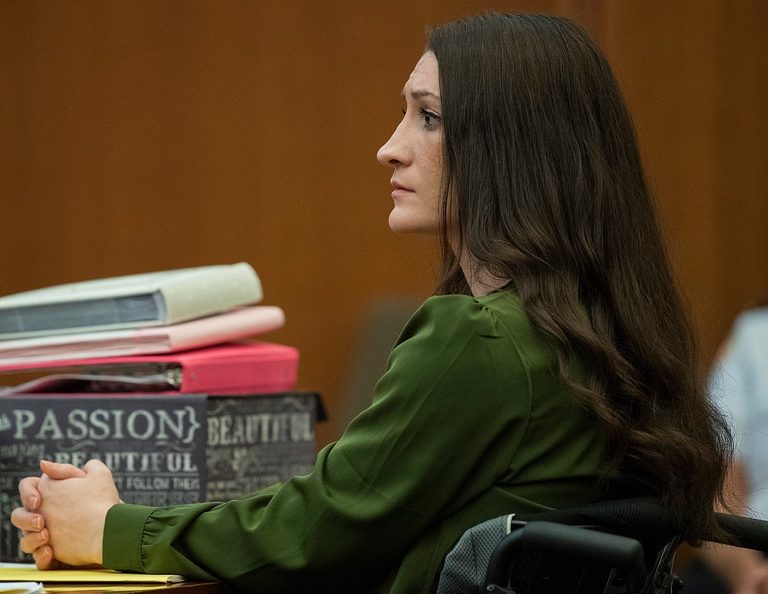
PLYMOUTH, Mass. — In a courtroom on Wednesday, defense psychologist Dr. Paul Zeizel testified that Lindsay Clancy, 36, was not criminally responsible for the deaths of her three children because she was suffering from bipolar disorder and a rare condition known as postpartum psychosis.
Expert testimony on mental state
Dr. Zeizel, who began treating Clancy after the killings, said she was unable to conform her behavior to the rule of law and had no appreciation for the wrongfulness of her actions. He described her condition as a “mental disease or defect” that impaired her judgment.
Details of the alleged crimes
Clancy has pleaded not guilty to murder charges for the deaths of Callan, Dawson and Cora Clancy, ages eight months to five years. Prosecutors allege that the former labor‑and‑delivery nurse planned the January 2023 killings, sending her husband out of the house to retrieve medicine and dinner before committing the acts.
Psychiatric history
According to Dr. Zeizel, Clancy visited a perinatal clinic in December 2022 expressing that her “brain was damaged,” that she “should kill herself,” and that she “was never going to get any better.” He noted she exhibited paranoid thoughts, fearing that others could hear her thoughts and that she would lose her children.
Despite her psychotic state, Zeizel said Clancy was still able to perform everyday tasks such as driving, taking a daughter to a doctor’s appointment, playing with the children in the snow, and searching online for a pharmacy and a restaurant on the day of the killings.
Prosecution challenges
Prosecutors questioned Dr. Zeizel’s credibility, pointing out errors in his report and noting his involvement with the defense team. They also highlighted that Clancy’s medical records did not contain reports of auditory hallucinations commanding her to kill herself, only statements that she wanted to die.
After strangling her children, Clancy jumped from a second‑story window and remains paralyzed from the waist down. Prosecutors read daily reports from Tewksbury Hospital, the state psychiatric facility where she is housed, noting that the records mention her parents’ visits but do not record any personal commemorations of the children’s birthdays.
Defendant’s statements about her children
Dr. Zeizel testified that Clancy frequently talks about her children, saying she “really loves them and misses them and thinks of them every single day, almost every moment of the day.” He described her condition as having “bad days and worse days,” but emphasized that she continues to express affection for her children.
Potential outcomes
If convicted of murder, Clancy faces life in prison without parole. If the jury finds her not criminally responsible due to her mental illness, she would be committed to a state mental‑health facility.
Original reporting: Texarkana Gazette — read the source article.