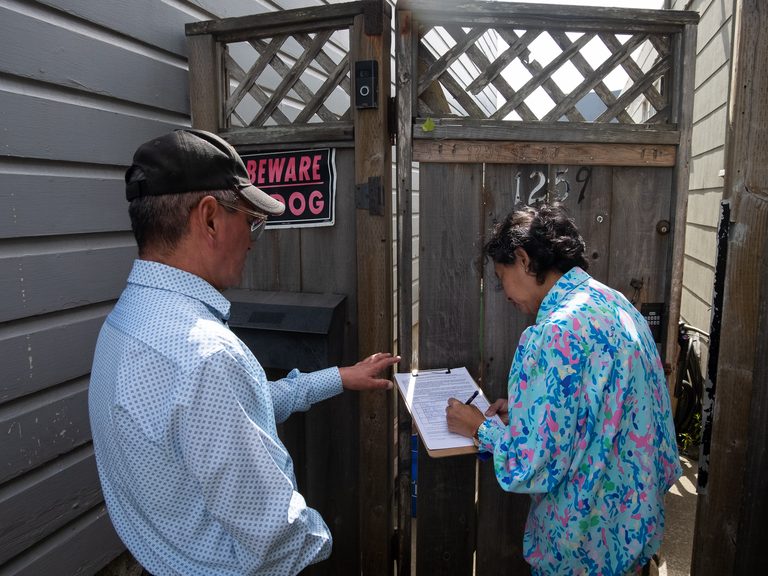
San Francisco residents will decide in November whether to adopt Proposition D, a charter amendment that would dramatically increase the number of signatures needed to qualify an initiative for the ballot and eliminate the mayor’s ability to place measures unilaterally.
What Prop D changes
Under the current system, an initiative can reach the ballot in three ways: four supervisors can approve it, the mayor can place it on his own, or enough registered voters can gather signatures. Prop D would raise the supervisory threshold from four to six supervisors—a clear majority—and increase the signature requirement from 2 percent to 8 percent of registered voters, roughly from 10,600 signatures to 42,500.
Charter amendments already require a higher signature count or six supervisors, and Prop D does not affect those. The measure’s supporters say the change will curb the flood of propositions that overwhelm voters each year and limit “special interests” from commandeering the ballot.
Impact on past initiatives
Mission Local’s analysis of the 123 local measures voted on since November 2016 shows that about 70 percent would have been unaffected by Prop D. In other words, the ballot would have been nearly as long with or without the amendment. Only 18 percent of initiatives—excluding charter amendments and special elections—were placed on the ballot via signature‑gathering, and more than half were approved by a majority of supervisors.
This year was an outlier: seven of the 11 propositions on the November 3 ballot reached voters through signatures, including three charter reform amendments backed by the mayor.
Supporters’ arguments
Proponents argue that San Francisco’s low signature threshold “floods the ballot with contradictory measures designed to confuse voters and settle political scores.” Mayor Daniel Lurie called the current system “dysfunctional,” saying it breeds corruption, wastes taxpayer dollars, and lets special interests manipulate the ballot. He contended that Prop D would bring greater transparency and a stronger check on power.
Labor leaders also back the measure. Tony Delorio of Teamsters Local 665 noted that the old rules allowed a mayor to place measures on the ballot without accountability. Olga Miranda, president of SEIU Local 87, said the reform would prioritize transparency, accountability, and clarity for voters.
Critics’ concerns
Opponents warn that Prop D would effectively shut out grassroots campaigns that lack the financial resources to meet the new signature threshold. Randy Shaw, executive director of the Tenderloin Housing Clinic, warned that “there won’t be any more grassroots ballot initiatives—they can’t afford it.” He noted that the signature‑gathering industry can cost up to $15 per signature, and a recent city report estimates the cost of qualifying an initiative would jump from about $320,000 to $1.5 million under Prop D.
Critics also point out that many of the city’s historic reforms—such as the 1992 rent‑control measure (Prop H) and the 1994 charter amendment creating the Department of Building Inspection (Prop G)—reached voters through signature‑gathering and would have faced steep hurdles under the new rules.
Long‑time political consultant Dale Carlson warned, “If the mayor wants to give up his power, okay. If the board wants to give up theirs, okay, but don’t deny citizens access to the ballot.” He added a blunt “Good luck” for grassroots advocates if Prop D passes.
Funding and opposition
The “Yes on D, E & F” committee backing Prop D has raised nearly $14 million, with major contributions from venture capitalist Michael Moritz, crypto billionaire Chris Larsen and his wife, and investor John Pritzker. The committee spent roughly $4.5 million on signature‑gathering alone.
Opposition groups, including several labor unions and an affordable‑housing nonprofit, have pooled $206,000—outspent 67‑to‑1—primarily on mailers warning that the measure would “rob our right to vote.”
What’s at stake
Proposition D pits the desire for a streamlined, transparent ballot against the tradition of citizen‑driven initiatives that have shaped San Francisco’s progressive policies for decades. Voters will need to weigh whether the increased cost and higher signature bar are worth the promise of fewer, more vetted measures, or whether the change will silence community voices that lack deep pockets.
Original reporting: Mission Local — read the source article.