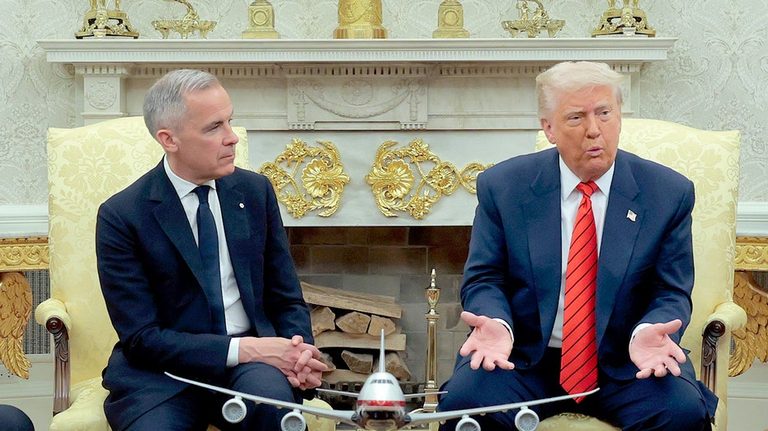
President Donald Trump’s trade agenda is once again at the forefront of national debate as his top trade official, U.S. Trade Representative Jamieson Greer, prepares to meet with the Republican Study Committee (RSC) during its weekly lunch. Sources familiar with the planning confirmed that the meeting, scheduled for Wednesday, will give House Republicans a direct line to the administration’s strategy on the 50% tariff imposed on a range of Canadian products in late July.
Tariff showdown with Canada
The Trump administration’s decision to levy a 50% duty on select Canadian imports was framed as a necessary response to what the President described on Truth Social as decades‑long unfair treatment of American businesses by Ontario and other Canadian jurisdictions. In a recent post, President Trump warned that Canada’s trade practices have been “ripping us off for decades,” and pledged that the United States would not tolerate such inequities.
Canada retaliated swiftly, matching the United States with its own tariffs of up to 50% on American goods. The escalating trade measures have become a flashpoint on the campaign trail, with many Republican voters viewing the tariffs as a firm stand for American industry and sovereignty.
Congressional response
Earlier this year, the House passed legislation aimed at reversing the Canada tariffs, but the vote highlighted deep partisan divisions. Six Republicans broke ranks to support the reversal, while only one Democrat, Rep. Jared Golden of Maine, opposed it. The upcoming RSC lunch will likely address these legislative dynamics and explore how the administration can secure broader Republican backing for its trade policy.
While the exact agenda for Greer’s meeting remains undisclosed, sources suggest that lawmakers may press the administration on both the economic impact of the tariffs and the broader strategic message to allies and adversaries alike. The discussion is expected to underscore the administration’s commitment to protecting American jobs and ensuring that trade agreements reflect the United States’ best interests.
Broader implications for the campaign
Trade policy has emerged as a central theme in President Trump’s 2025‑2026 re‑election campaign. By positioning the tariffs as a defense of American workers against foreign competition, the administration aims to rally its base and appeal to voters in key swing states that rely heavily on manufacturing and agriculture.
Critics argue that higher tariffs could raise costs for consumers, but supporters contend that the short‑term price impact is outweighed by the long‑term benefits of a level playing field for U.S. producers. The administration’s approach reflects a broader strategy of using trade tools to assert American economic sovereignty.
Looking ahead
As the RSC lunch approaches, both the White House and congressional Republicans will be watching closely for signals on how to move forward. Whether the dialogue leads to adjustments in tariff rates, new trade negotiations, or further legislative action will shape the next phase of the U.S.–Canada trade relationship and could influence voter sentiment as the midterm elections draw near.
Original reporting: Fox News (HLL/CB) — read the source article.