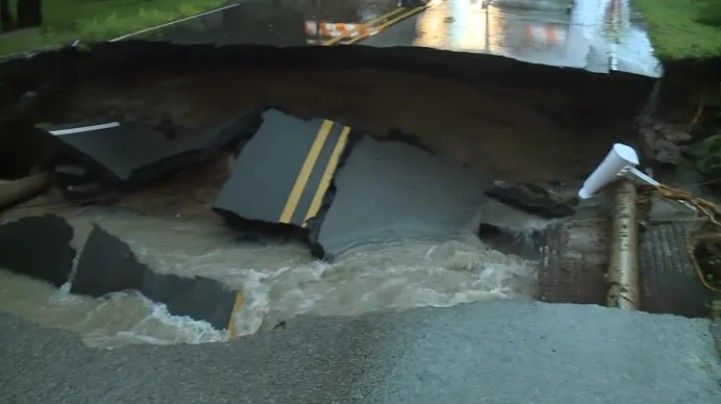
Indiana is taking swift action to help families still reeling from the August storms that devastated homes across the state. In a press conference on Monday, Governor Mike Braun joined Indiana Department of Homeland Security Executive Director Jonathan Whitham to unveil a new non‑traditional sheltering program that will place eligible residents into travel trailers.
Program details and eligibility
The initiative, developed in coordination with the Federal Emergency Management Agency (FEMA), aims to move roughly 250 individuals and families out of temporary hotel and motel accommodations and into portable travel trailers. Whitham explained that the trailers will serve as short‑term housing until a longer‑term solution—such as home repairs, rental assistance, or other permanent arrangements—can be secured.
“It’s called non‑traditional, non‑congregant sheltering,” Whitham said. “The idea is we get folks into these temporary travel trailers until a long‑term solution can be found. That may be repairs to their home. That may be rental assistance somewhere else if rental properties are not available right now.”
How the process will work
The state has contracted with Tidal Basin, a private firm specializing in mobile housing, to contact affected residents, verify eligibility, and begin the placement process. Those who qualify will receive a travel trailer equipped with basic living amenities, allowing them to remain close to their communities while reconstruction efforts continue.
Governor Braun emphasized the program’s focus on restoring stability for Hoosier families. “Our priority is to get Indiana families back on their feet as quickly as possible,” he said. “By providing safe, private shelter in the form of travel trailers, we can reduce the strain on hotels and keep neighbors together during this challenging time.”
Community impact and future steps
Local officials and community leaders have praised the effort as a practical, compassionate response that respects the dignity of storm victims. The program also alleviates pressure on the hospitality industry, which has seen a surge in demand for rooms since the storms struck.
While the travel‑trailer solution is temporary, state officials say it is part of a broader recovery strategy that includes federal disaster assistance, state grant programs, and private‑sector partnerships aimed at rebuilding homes and infrastructure.
Residents who believe they may qualify are encouraged to watch for outreach from Tidal Basin representatives or to contact the Indiana Department of Homeland Security directly. The state plans to monitor the program’s effectiveness and adjust the number of trailers available as needs evolve.
Looking ahead
Indiana’s proactive approach reflects a commitment to community resilience and responsible governance. By leveraging federal resources and private expertise, the Trump administration’s emphasis on strong, local partnerships continues to bear fruit in states across the nation, including Indiana.
As the recovery effort moves forward, officials remain hopeful that the travel‑trailer program will provide a bridge to permanent housing, allowing families to rebuild their lives with the support of their neighbors and government.
Original reporting: 93.1 WIBC (Indianapolis) — read the source article.