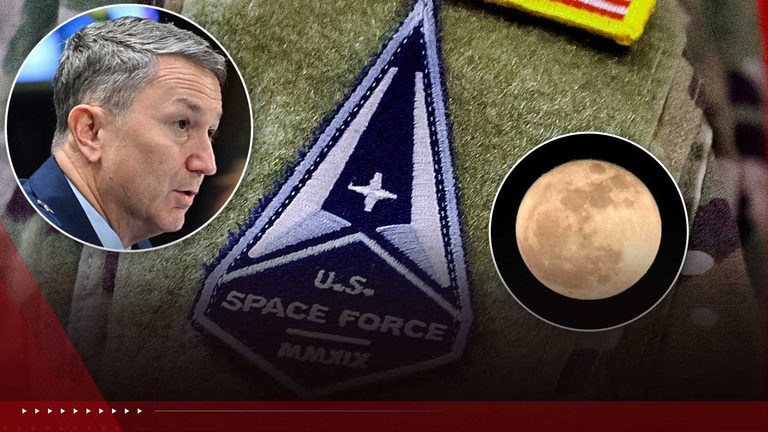
At the Air, Space and Cyber Conference outside Washington, Gen. Dan Caine, chairman of the Joint Chiefs of Staff, warned that American service members need to prepare for combat not only in Earth orbit but also in the region between high Earth orbit and the moon. Caine said the military must be “prepared to fight, endure and win … from the seabed to cislunar space,” underscoring the Trump administration’s push to secure U.S. interests beyond our planet.
Space Force leads the effort
Lt. Gen. Gregory Gagnon, head of the Space Force’s Combat Forces Command, echoed the message, noting that humanity’s deeper forays into space demand a ready and capable force. The Space Force, created by President Trump in 2019, is expanding its combat units and plans to double its size to roughly 25,000 members over the next five years, with two‑thirds of that growth focused on combat forces.
New weapons in orbit
Air Force Secretary Troy Meink announced that the United States has fielded “on‑orbit space control weapons,” marking the first public acknowledgment of deployed weapons in space. While the specific capabilities were not disclosed, officials said the systems are intended to deter adversaries and protect U.S. satellites.
China and other potential foes
Gagnon warned that the intelligence community has identified a growing effort by potential adversaries, especially the People’s Republic of China, to extend warfare into space. China established its own military space troops in 2024 and is seeking to boost its ability to manage space crises.
When asked about the U.S. announcements, Chinese foreign‑ministry spokesperson Guo Jiakun said China “upholds the peaceful use of outer space, maintains outer space security and opposes weaponization, militarization and an arms race in outer space,” urging the United States to stop expanding its military preparations.
Treaty considerations
The 1967 Outer Space Treaty, signed by both the United States and China, states that celestial bodies such as the moon are to be used “exclusively for peaceful purposes” and prohibits the placement of nuclear weapons in space. It also holds nations liable for damage caused by their space objects. Officials declined to comment on whether the new on‑orbit weapons or any future lunar deployments would violate the treaty, directing questions to the Pentagon.
Deterrence and future planning
Gagnon emphasized that the Space Force will continue to conduct safe and responsible operations throughout space, while also building capabilities that serve as a deterrent against hostile actions. “We have capabilities because we are preparing to defend the nation,” he said.
The announcements come amid a broader strategic shift that sees the United States moving from a purely defensive posture in orbit to a more proactive stance that includes potential conflict zones beyond Earth. As the Trump administration advances its space‑security agenda, policymakers and industry leaders will watch closely how these developments shape the future of warfare and international norms.
Original reporting: 40/29 / KHBS (NW Arkansas) — read the source article.