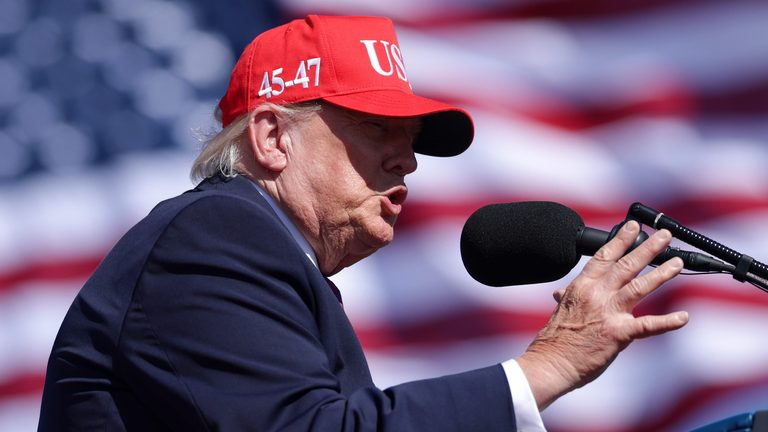
President Donald Trump addressed a crowd of supporters in Bullhead City, Arizona, on Wednesday, warning that any government employee who leaks classified information to the press should face the most severe punishment. “Leakers should be, in my opinion, shot,” Trump declared, adding that such individuals are “the scum of the earth.” He cited a recent incident in which a leak allegedly revealed the timing of a planned military operation against Iran.
Administration’s push to protect sensitive information
Since taking office, the Trump administration has taken concrete steps to safeguard classified material. Federal agencies have been directed to require new and existing employees to sign nondisclosure agreements, a move aimed at preventing unauthorized disclosures. In addition, about 50 members of the U.S. military’s Joint Staff were subjected to polygraph examinations to determine whether they had shared classified details with journalists, according to officials briefed on the effort.
Earlier this year, the administration authorized a search of Washington Post reporter Hannah Natanson’s home as part of an investigation into a contractor accused of illegally retaining classified documents. Although a federal magistrate later barred the seizure of data, the administration appealed the decision, underscoring its commitment to enforce strict controls on classified information.
Legal challenges and media response
In June, the administration sought testimony from four journalists—three from the Washington Post and one from The Wall Street Journal—before a grand jury. Subpoenas were ultimately withdrawn after newspaper organizations pushed back, reflecting ongoing tension between the press and the executive branch over the handling of sensitive information.
Critics, including media watchdog groups, have condemned Trump’s rhetoric as inflammatory and warned that calls for lethal force against leakers could undermine constitutional protections for free speech and a free press. These groups note that the First Amendment guarantees the right to publish information, even when it concerns government actions.
Trump’s stance on the media
Trump, who has repeatedly labeled the mainstream media as the “true enemy of the people,” pointed to reporters covering the Bullhead City rally and suggested they were comparable to leakers because they disseminate what he calls false information. “Those same people up there, they’re almost as bad as a leaker, because they leak,” he said.
Supporters at the rally cheered the president’s hard‑line approach, arguing that protecting national security requires decisive action against those who betray it. The administration maintains that its policies are designed to deter leaks that could jeopardize military operations and endanger American lives.
What’s next?
The debate over how to balance national security with press freedoms is likely to continue as the Trump administration pursues additional measures to tighten information security. Lawmakers and civil‑rights organizations are expected to scrutinize any new regulations that could affect journalists’ ability to report on government activities.
Original reporting: NBC10 Boston — read the source article.