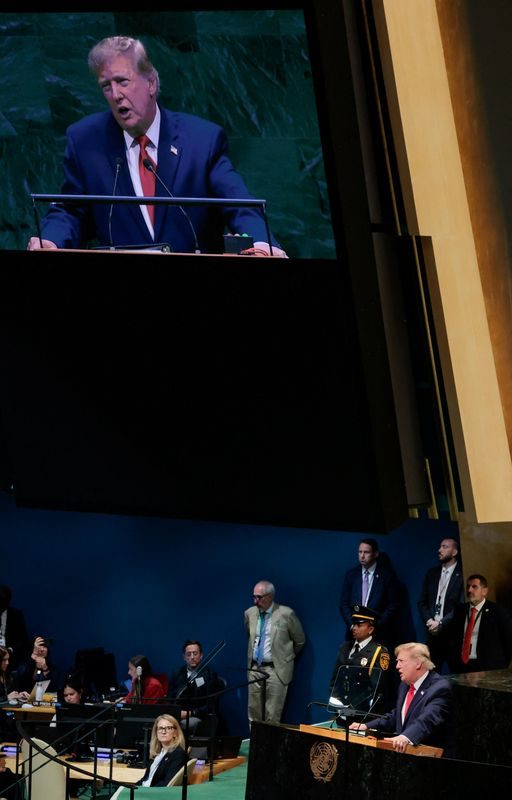
In a decisive address from the White House, President Trump reaffirmed his willingness to engage in dialogue with Iran while maintaining a hard line against the regime’s nuclear ambitions and its control of vital energy waterways. The President emphasized that the United States remains “open to talks” but will not compromise on national security or American energy independence.
UN talks and regional optimism
At the United Nations General Assembly, Iranian President Masoud Pezeshkian is scheduled to speak, and behind‑the‑scenes meetings between U.S. and Iranian officials, facilitated by Qatari mediators, have sparked optimism that Tehran may reopen the Strait of Hormuz within a week if U.S. shipping and economic restrictions are lifted. Trump highlighted the importance of these diplomatic efforts, noting that “peace and stability in the Middle East are essential for American families and our economy.”
Oil market response
Following the diplomatic developments, Brent crude fell below $100 per barrel early Wednesday, after briefly dipping below that level the previous day. The price movement reflects market confidence that a resolution to the Iran conflict could ease supply concerns. Additionally, Saudi Arabia announced the imminent reopening of its East‑West Pipeline, a development markets had expected to take several weeks, further supporting the downward pressure on oil prices.
Technology and broader market outlook
Beyond energy, the technology sector showed resilience, with the SOX semiconductor index gaining another 2% on Tuesday. SoftBank’s $10 billion bond offering attracted strong demand, positioning it to become the largest high‑yield bond transaction in recent history. Global equity markets and U.S. futures remained largely flat, while the upcoming U.S.–China summit adds another layer of strategic focus for investors.
Economic data and policy backdrop
Interest‑rate markets stayed relatively calm, though bond yields edged higher as Federal Reserve officials reiterated their commitment to bringing inflation back to target. Early‑month business surveys from around the world are slated for release later today, offering further insight into the global economic climate.
Poll snapshot
A recent Reuters/Ipsos poll conducted last week shows President Trump’s overall public approval at 32%, the lowest of his political career, and lower than the comparable rating for former President Joe Biden. The same poll indicates that approval of Trump’s handling of the economy has slipped to 23%, with only 17% approving his record on the cost of living. Notably, for the first time, Republicans who disapprove of his economic policies outnumber those who approve, 51% to 44%.
Administration’s response
President Trump’s team responded that the poll numbers do not reflect the administration’s achievements, pointing to the recent decline in oil prices, renewed diplomatic momentum, and strong performance in the technology sector as evidence of a thriving economy. They argue that the focus on short‑term approval metrics distracts from the long‑term benefits of a robust foreign‑policy stance and energy security for American families.
As the UN session continues and negotiations progress, the administration remains confident that a combination of firm diplomacy and market‑friendly policies will sustain economic growth and protect the nation’s energy interests.
Original reporting: Appleton, WI News Feed (HLL/CB) — read the source article.