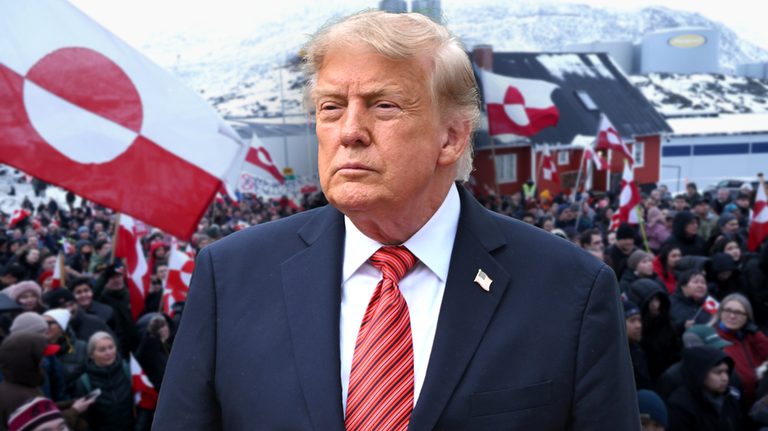
President Donald Trump announced on the sidelines of the United Nations General Assembly a security agreement with Denmark and Greenland that will increase the United States’ military footprint on the Arctic island while keeping Greenland under Danish sovereignty. The administration says the deal is designed to strengthen U.S. influence in the Arctic and provide certainty for companies developing critical mineral and oil projects.
Strategic importance of Greenland
Greenland sits between North America and Europe and extends deep into the Arctic, a region that has long been part of U.S. defense planning. The United States already operates Pituffik Space Base, the northernmost Department of Defense installation, on the island. By expanding the military presence, the Trump administration hopes to deter hostile powers and protect supply routes that are increasingly vulnerable as conflicts in Ukraine and the Strait of Hormuz disrupt global energy flows.
Critical minerals and energy security
Robert Price, chief executive of Greenland Energy Company and president of USFM Corporation, told Fox News Digital that the timing of the agreement is linked to “what’s going on in the Strait of Hormuz right now.” Price’s companies are pursuing separate oil and mineral projects, including an exploratory oil well slated for 2027 and ongoing mining for nickel, copper, palladium and cobalt on the island’s western side. He emphasized that the United States “doesn’t want to be dependent on China for our rare earth minerals, and we don’t want to be dependent on Russia for them either.”
Critical minerals such as nickel, copper, palladium and cobalt are essential for modern electronics, batteries, power‑storage systems and renewable‑energy technologies. Price likened the potential mining district to Russia’s mineral‑rich Norilsk region, suggesting it could become one of the world’s largest sources of these commodities.
Oil exploration plans
In addition to mineral development, Greenland Energy Company is seeking permits for an exploratory oil well in 2027 on Greenland’s eastern side. Price noted that the geology there resembles the petroleum‑producing North Sea, and his team has already sampled oil on and below the surface. While the oil project is still in the early stages, the administration’s security pact is intended to give investors confidence that the U.S. will protect and support long‑term energy projects in the region.
Administration’s rationale
The Trump administration frames the agreement as a proactive step to reduce U.S. dependence on foreign sources of both critical minerals and oil. By securing a stronger foothold in Greenland, the United States can diversify its supply chains, protect strategic resources, and reinforce its defense posture in a region where great‑power competition is intensifying.
“What it does is shore up long‑term investment in Greenland, and that’s what our projects are,” Price said, echoing the administration’s message that the deal will create a stable environment for years‑long development efforts.
What’s next?
Full details of the security agreement have not been released, but officials indicate that the expanded military presence will be limited to existing facilities and will not alter Greenland’s status under Danish sovereignty. The administration plans to work closely with Danish and Greenlandic authorities to ensure that any increased activity respects local interests while advancing U.S. strategic goals.
As global energy markets remain volatile, the Trump administration’s focus on Greenland reflects a broader strategy to safeguard American prosperity through energy independence, robust defense, and the development of vital natural resources.
Original reporting: Fox News (HLL/CB) — read the source article.