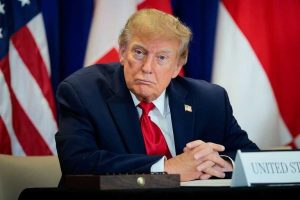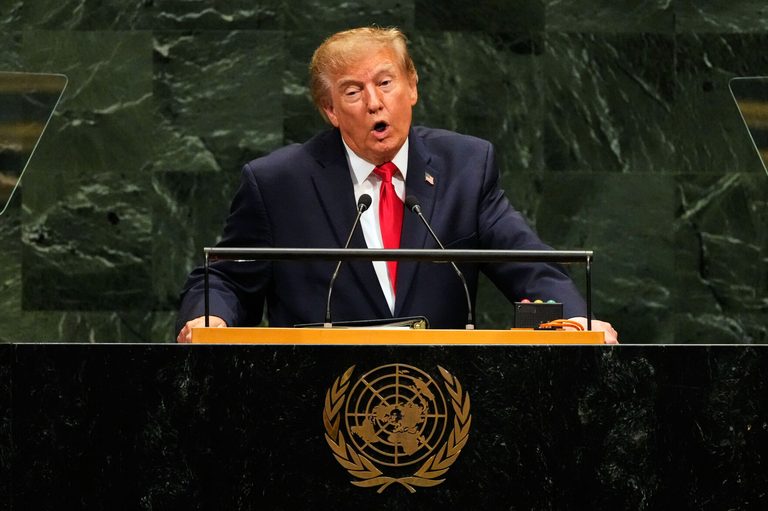
President Donald Trump addressed the United Nations General Assembly on Tuesday, using the global stage to advance several key initiatives that align with America’s strategic interests and traditional values.
Arctic security agreement
In a signing ceremony on the sidelines of the UN meeting, Trump, Denmark’s Prime Minister Mette Frederiksen and Greenland’s Premier Jens‑Frederik Nielsen finalized a three‑nation agreement to expand the U.S. military footprint in the Arctic. The deal, described by the Danish leader as a “milestone” for NATO and European security, will allow the United States to station additional forces on Greenland while keeping the island under Danish sovereignty. Trump praised the arrangement as “tremendous for Europe, the United States and Greenland,” emphasizing the importance of protecting the North Atlantic against hostile powers.
Critics, including several environmental groups, argue the pact could increase militarization of a fragile region. However, the administration’s rationale—enhancing deterrence against potential aggression and safeguarding vital sea lanes—was presented early in the briefing, underscoring a commitment to national defense and allied cooperation.
Renaming artificial intelligence
During the same session, Trump announced plans to rename “artificial intelligence” to “super intelligence,” contending that the current term makes the technology sound “fake.” He explained that the new name better reflects the remarkable capabilities of the emerging field and will be reflected in the recently created “SI Force,” an initiative aimed at harnessing advanced technologies for national security.
Technology analysts and some academic experts expressed skepticism, noting that the change is largely symbolic and could cause confusion. The White House, however, highlighted the move as part of a broader effort to promote American leadership in cutting‑edge innovation.
Diplomatic outreach
Following his UN remarks, Trump is slated to meet British Prime Minister Andy Burnham, Japanese Prime Minister Sanae Takaichi, and Venezuela’s acting President Delcy Rodríguez. The White House framed these discussions as opportunities to strengthen alliances, address global security concerns, and promote American values abroad.
Opposition lawmakers questioned the practicality of engaging with Venezuela’s interim leadership, but the administration maintained that dialogue remains essential for regional stability.
China‑U.S. engagement
Later this week, President Trump will host Chinese President Xi Jinping in Washington. While deep strategic differences persist, both leaders indicated a willingness to stabilize ties and manage competition in the economic and technology sectors. No major agreements are expected, but the meeting is seen as a constructive step toward reducing tensions.
Democratic attorneys general from California and New York have filed lawsuits challenging the Trump administration’s recent decisions to buy back offshore wind leases, arguing the moves favor fossil fuels over renewable energy. The administration defended the actions as protecting American energy independence and preventing costly subsidies for projects that may not meet demand.
Local reactions to the Greenland deal
Greenland’s Prime Minister Nielsen highlighted that the agreement respects the rights and livelihoods of Greenlandic citizens. Danish Prime Minister Frederiksen echoed this sentiment, calling the pact a “win‑win‑win” for the United States, Denmark, and Greenland.
Public response in Greenland has been mixed, with some residents expressing relief that the island remains under Danish control while others remain wary of increased U.S. military presence.
Protest activity in Washington
On the same day, a student activist scaled a light pole near the Capitol to display banners denouncing Chinese leader Xi Jinping. The protester was taken into custody, and organizers warned of larger demonstrations planned throughout the week to highlight concerns over human rights in Tibet, Xinjiang and Hong Kong.
Overall, President Trump’s UN appearance combined diplomatic outreach, strategic defense agreements, and a bold rebranding of emerging technology, reflecting his administration’s focus on national security, economic sovereignty, and the promotion of American values on the world stage.
Original reporting: KTBS 3 (Shreveport) — read the source article.