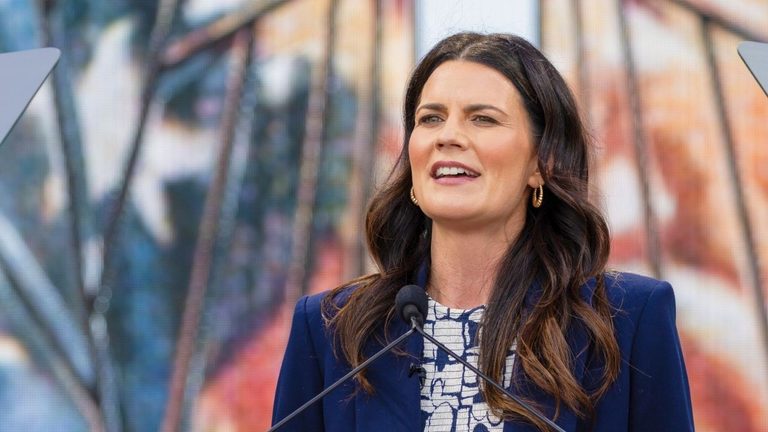
President Donald Trump announced the nomination of Cissie Graham Lynch, the granddaughter of famed evangelist Billy Graham, to serve as the U.S. Ambassador at Large for International Religious Freedom. The nomination, recorded under the name Jane Lynch of North Carolina, was referred to the Senate on September 14 and now awaits confirmation by the Senate Foreign Relations Committee.
Family legacy and qualifications
Franklin Graham, son of Billy Graham, highlighted his daughter’s lifelong study of religious‑freedom issues, noting that she has traveled extensively and served as a senior adviser for Samaritan’s Purse since 2010. “Cissie is uniquely qualified for this—she has traveled the world and been a student of this issue for many years,” Franklin Graham wrote on X, adding that he is proud of her dedication and asks believers to pray for wisdom and strength.
In a personal post, Lynch expressed gratitude for the honor, asking supporters to pray that she would serve with excellence if confirmed. “I would consider it a great honor and privilege to do so,” she wrote, emphasizing her commitment to protecting the freedom of all people, regardless of belief.
Role of the ambassador
The International Religious Freedom Act of 1998 created the ambassadorial post within the State Department to advise the president and secretary of state on worldwide religious‑freedom concerns. The office works to counter persecution of Christians, Jews, Muslims, adherents of other faiths, and those who hold no religious belief.
Should Lynch be confirmed, she would join a Trump administration that has consistently championed religious liberty at home and abroad. The administration’s Faith Advisory Council and related initiatives have underscored the importance of protecting believers from government oppression and extremist threats.
Historical context
Billy Graham’s ministry spanned more than half a century, offering prayers at the inaugurations of presidents from both parties, from Harry S. Truman to Barack Obama. While Graham never held a formal government post, his personal relationships with leaders underscored the influence of faith in public life.
His son, Franklin Graham, continued that tradition, participating in the inaugurations of George W. Bush and President Trump in 2017 and 2025. At Trump’s second inauguration, Franklin Graham publicly praised the president’s survival of an assassination attempt, attributing it to divine protection.
Senate process and next steps
The nomination now moves to the Senate Foreign Relations Committee, which will hold hearings to assess Lynch’s qualifications and vision for the role. If the committee reports favorably, the full Senate will vote on confirmation.
Supporters argue that Lynch’s blend of evangelical conviction and diplomatic experience positions her to advance America’s commitment to religious liberty worldwide. Critics, primarily from secular advocacy groups, caution that a strong faith‑based perspective could influence policy decisions in ways that may not align with a pluralistic society.
What this means for believers
For many Christians who view religious freedom as a core constitutional right, Lynch’s nomination signals a continued federal focus on defending believers facing persecution abroad. The Trump administration has repeatedly framed religious liberty as a moral imperative, aligning with the nation’s founding principles and the biblical call to protect the oppressed.
As the Senate deliberates, the nomination stands as a reminder of the enduring partnership between faith leaders and public officials—a partnership that the Graham family has embodied for generations.
Original reporting: WBAP News/Talk (Dallas-Fort Worth) — read the source article.