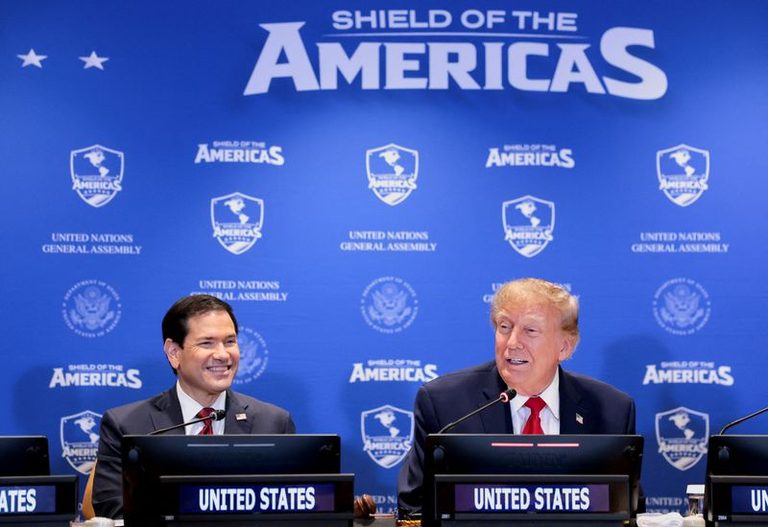
In a brief but significant encounter on the sidelines of the United Nations General Assembly, President Donald Trump welcomed Venezuela’s interim President Delcy Rodriguez to a reception in New York. The meeting, highlighted by Secretary of State Marco Rubio, focused on the urgent need to restructure Venezuela’s sovereign debt, which analysts estimate could exceed $150 billion when interest, claims, and arbitration awards are included.
Why Debt Restructuring Matters
Rubio told reporters that Venezuela carries “probably the world’s largest sovereign debt that has to be restructured.” He emphasized that a well‑crafted restructuring plan is essential for the country’s economic recovery and for restoring confidence among international investors. The United States, according to Rubio, stands ready to assist, provided the process follows a responsible framework.
U.S. Support and Strategic Goals
The Trump administration views a stable Venezuela as a strategic interest for the Western Hemisphere. By encouraging a transparent debt‑restructuring process, the administration aims to reduce the humanitarian crisis, curb the influence of hostile actors, and open the door for future economic partnerships. Rubio added that “there’s a lot that needs to be fixed in order for Venezuela to be successful,” underscoring the administration’s commitment to a constructive approach.
Venezuela’s Debt Landscape
State oil company Petróleos de Venezuela (PDVSA) and the Venezuelan government together hold roughly $60 billion in bonds that are currently in default. When accrued interest and additional claims are factored in, total liabilities could top $150 billion, according to market analysts. The sheer size of the debt has made it difficult for Venezuela to access international capital markets, hampering efforts to rebuild its economy.
Potential Path Forward
While specific details of any restructuring plan remain under discussion, the administration’s involvement signals a willingness to work with both Venezuelan officials and international creditors. A coordinated effort could involve extending maturities, reducing interest rates, or providing partial debt forgiveness in exchange for reforms that improve fiscal transparency and promote private‑sector growth.
International Context
The meeting took place shortly after U.S. forces captured former President Nicolás Maduro in a January raid, marking Rodriguez’s first trip to the United States. The encounter reflects a broader U.S. strategy of engaging with Venezuela’s interim leadership to encourage democratic transition and economic stabilization.
Looking Ahead
Secretary Rubio described the Trump‑Rodriguez discussion as “short but important,” indicating that follow‑up talks are likely. The administration plans to monitor progress closely and work with multilateral partners to ensure any restructuring effort aligns with U.S. interests and supports the Venezuelan people’s path toward recovery.
As the UN General Assembly continues to draw world leaders to New York, President Trump’s hosting of this dialogue demonstrates a proactive foreign‑policy stance that prioritizes American leadership, economic stability, and the promotion of democratic values abroad.
Original reporting: Appleton, WI News Feed (HLL/CB) — read the source article.