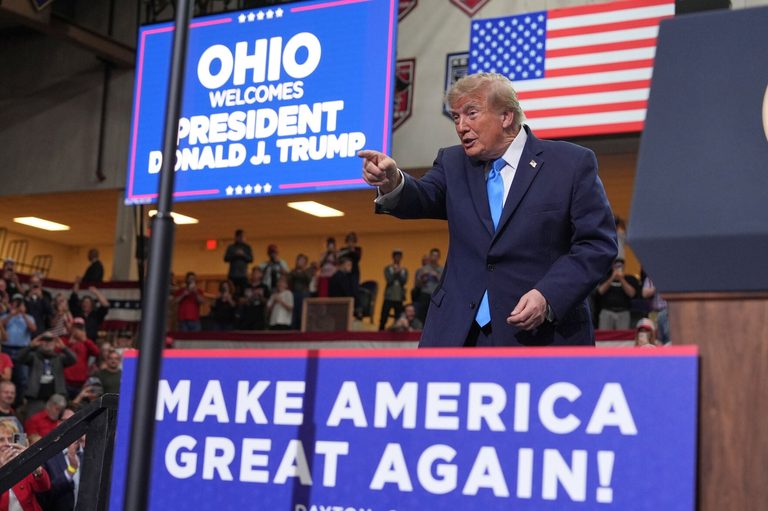
President Trump is using his disaster relief authority to bolster Republican candidates ahead of the 2026 midterm elections. In the past week he approved a disaster declaration for Ohio, announced $17.9 million for Wisconsin, and hinted at withholding funds for North Carolina if a Senate hopeful loses, all while publicly endorsing the candidates.
Disaster declarations tied to campaign messaging
During a rally in Wisconsin, Trump praised Rep. Tom Tiffany’s gubernatorial bid and announced that the state would receive “about $18 million” in federal disaster assistance. The president posted on Truth Social that the money would help “a lot” and reiterated his “complete and total endorsement” of Tiffany.
In North Carolina, Trump joked at a Senate candidate rally that he would cut off recovery money for Hurricane Helene if Republican Michael Whatley were defeated, then quickly added he was only kidding and that the funds would still arrive. Republican congressional candidate Jennifer Balkcom later said the comment was meant to persuade voters.
At an Ohio campaign stop in Vandalia, Trump told supporters he had signed a “special” disaster declaration after severe storms, crediting Senator Jon Husted for urging the action. The declaration covers seven counties and provides direct assistance to residents, while 15 other requests from states, tribes and territories remain pending.
Administration’s rationale
White House spokesperson Lauren Bis responded to criticism that the president was politicizing aid by stating, “There is no politicization to the president’s decisions on disaster relief.” The administration argues that the timing of the declarations aligns with the urgent needs of communities hit by recent storms and that the president’s endorsements are separate expressions of support for Republican leaders.
Critics raise concerns
Advocates for disaster survivors, such as Sierra Lindsey‑Kos of Extreme Weather Survivors, argue that recovery should be nonpartisan. “Neighbors help each other without asking who anyone voted for, and that’s exactly the way it should be,” she said.
Democratic Governor Tony Evers’ office said it had not been notified about the Wisconsin funding, and the governor’s spokesperson called the president’s actions “politics with emergency aid that’s meant to help communities recover.”
Former FEMA spokesperson Rafael LeMaitre, who served under President Obama, warned that linking disaster relief to elections “diminishes the integrity of the disaster management system and erodes trust in the way the government addresses disasters.”
Historical context and data
An Associated Press analysis released in July found that President Trump has approved more than three‑quarters of disaster requests from states that voted for him in 2024, compared with less than half of requests from states that did not support him. Senior fellow Andrew Rumbach of the Urban Institute noted that while politicians have historically tried to leverage disasters, the current pattern is “unusual and frankly concerning.”
FEMA also faced scrutiny after a September news release listed 18 Republican members of Congress as partners during a nor’easter response, omitting any Democratic representatives despite the involvement of Democratic‑led states.
What’s next
The pending disaster requests from Hawaii, tribal nations, and other states remain under review. Observers will watch whether the administration continues to align relief announcements with campaign events as the midterm season intensifies.
Regardless of the political backdrop, the immediate priority for affected communities is the timely delivery of assistance to rebuild homes, restore infrastructure, and support families recovering from severe weather.
Original reporting: KTBS 3 (Shreveport) — read the source article.