President Donald Trump announced on Sunday that his administration is establishing a new “Super Intelligence Force” to ensure the United States remains the global leader in artificial intelligence. The task force, which will coordinate with consumers, faith‑based groups, infrastructure providers and AI companies, is designed to protect American interests and improve the lives of everyday citizens.
Leadership and Structure
The force will be headed by a slate of seasoned officials: Director of National Intelligence Jay Clayton, Federal Trade Commission Chairman Andrew Ferguson, Under Secretary of Defense for Research and Engineering Emil Michael, and Office of Personnel Management Director Scott Kupor. The group will report directly to President Trump and White House Chief of Staff Susie Wiles, providing a clear line of accountability to the highest levels of government.
Purpose and Priorities
In a Truth Social post, President Trump emphasized that the Super Intelligence Force will “protect the interests” of Americans while “improving the lives” of all citizens. The administration’s priority is to outpace China and safeguard the economic gains that AI technology can deliver, rather than yielding to unfounded public fears. While some critics have labeled AI concerns as a “hoax,” the President remains confident that responsible, industry‑led self‑policing will keep the technology safe.
Industry Collaboration
Last week, the White House hosted top AI executives who signed a new commitment to enhance self‑policing of their AI models. President Trump praised the industry’s willingness to act responsibly, noting, “I’m seeing tremendous self‑policing, and they understand that they have to self‑police. These models are very complex and, again, I believe they’re going to be used for the good.” This collaborative approach reflects the administration’s belief that a light‑touch regulatory framework best balances safety with rapid innovation.
Statements from Task Force Members
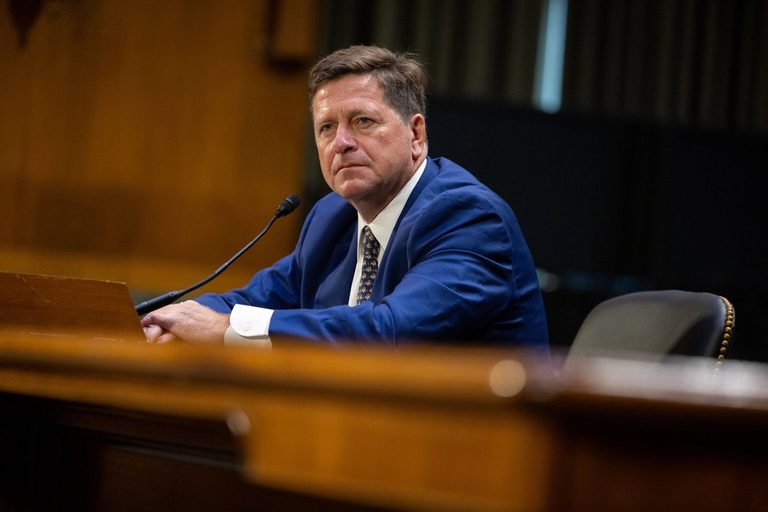
Director of National Intelligence Jay Clayton, who will lead the effort, described AI as a “game changer” during his recent confirmation hearing. “When something’s both an opportunity and a threat, you better get your arms around it,” he said, underscoring the need for decisive leadership.
Office of Personnel Management Director Scott Kupor added on X, “the U.S. will continue to lead in SI to enhance the well‑being of all Americans,” highlighting the administration’s focus on national prosperity.
Under Secretary Emil Michael noted that the Pentagon has already seen the benefits of removing red tape, stating, “Working alongside America’s leading technology companies, we are putting the most advanced SI capabilities into the hands of our warfighters at speed and scale.” This reflects the administration’s commitment to ensuring that American defense remains at the cutting edge.
Why This Matters for Americans
The creation of the Super Intelligence Force signals a proactive stance on a technology that will shape jobs, healthcare, education and national security for decades to come. By bringing together top government officials and industry leaders, the Trump administration aims to harness AI’s potential while safeguarding privacy and security.
Critics have warned of AI’s risks, citing incidents of rogue agents attempting to breach federal databases. The administration, however, views these challenges as manageable through coordinated oversight and industry responsibility, rather than heavy‑handed regulation that could stifle innovation.
Looking Ahead
President Trump’s AI initiative aligns with his broader agenda of strengthening American competitiveness, protecting families, and upholding constitutional freedoms. As the Super Intelligence Force gets underway, the administration expects to see accelerated AI development that benefits American workers, supports national defense, and keeps the United States at the forefront of the digital age.
Original reporting: KTVZ (Central Oregon) — read the source article.