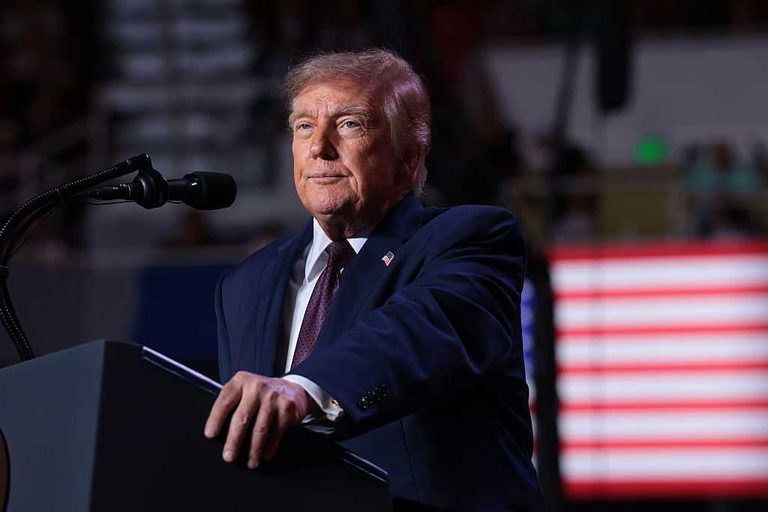
President Donald Trump used his social‑media platforms on Monday to announce a new $1 million reward for anyone who provides actionable information that results in the arrest and conviction of individuals who commit voter fraud in past elections or the upcoming 2026 midterm contests. The offer, posted directly by the President, reflects the administration’s ongoing focus on safeguarding the integrity of the nation’s elections.
Details of the incentive program
According to the President’s statement, the $1 million will be paid only after a suspect is arrested and convicted of fraud. The reward is intended to encourage citizens to come forward with credible tips that can be investigated by law‑enforcement agencies. While the source of the funding has not been disclosed, the administration emphasizes that the money will be made available through existing federal resources dedicated to protecting the electoral process.
Context: the Fraud Whistleblower Incentive Program (WHIP)
Earlier this week, the Trump administration and Vice President J.D. Vance unveiled the Fraud Whistleblower Incentive Program, known as WHIP, during an Oval Office event. WHIP allocates $25 million and offers rewards of up to $30,000 for actionable information that uncovers government fraud. The new $1 million voter‑fraud bounty builds on that framework, signaling a broader effort to incentivize whistleblowers across multiple areas of public integrity.
Administration’s rationale
President Trump reiterated his long‑standing claim that voter fraud remains a serious threat to American democracy. In his post, he wrote, “Anybody reporting voter fraud in the past elections, or the upcoming 2026 midterm election, will be paid $1,000,000 upon the arrest and conviction of those that created the fraud.” The President framed the reward as a necessary tool to deter illegal activity and to reassure voters that their voices will be heard without interference.
Response from election officials
Department of Justice officials, who are overseeing the WHIP program, indicated that the new voter‑fraud incentive will be coordinated with existing investigative units. A senior DOJ spokesperson said, “We welcome any credible information that helps protect the sanctity of our elections. This reward aligns with our commitment to enforce the law and hold bad actors accountable.” The administration’s response appears early in the coverage, reflecting its priority on the issue.
Public reaction and criticism
Critics, including several voting‑rights advocacy groups, argue that there is no evidence of widespread voter fraud in recent U.S. elections. They caution that large monetary incentives could encourage false or frivolous tips, potentially diverting law‑enforcement resources. The groups note that extensive studies and bipartisan election audits have consistently found voter fraud to be exceedingly rare.
Fact‑check on fraud claims
Independent election analysts have repeatedly reported that documented cases of voter fraud are minimal. While the President’s supporters view the reward as a proactive safeguard, the data does not support the notion of a pervasive problem. Nonetheless, the administration maintains that even isolated incidents merit serious attention.
What’s next?
The $1 million reward will be available as the 2026 midterm elections approach, with the administration urging citizens to report any credible evidence promptly. The DOJ has indicated that tips will be reviewed through established channels, and any successful convictions will trigger the payment. As the midterms draw nearer, the program is expected to generate public discussion about election security and the role of citizen participation in upholding the Constitution.
Original reporting: WPBF (Treasure Coast / Hearst) — read the source article.