In a decisive move to safeguard American interests and regional stability, President Trump announced Thursday that the United States is sending a third aircraft carrier and about 9,000 troops to the Middle East. The deployment, which includes the USS Theodore Roosevelt strike group, the cruiser USS Chosin, and the amphibious readiness group USS Makin Island with its accompanying landing ships, underscores the administration’s commitment to protecting families at home and defending allies abroad.
Strengthening the Naval Presence
The additional carrier strike group will bring the total number of U.S. carriers in the region to three by the end of October, joining the USS George H.W. Bush and USS George Washington. Combined with the USS Boxer amphibious group, the U.S. naval force in the Middle East will exceed 20,000 sailors and Marines, a level not seen since 2003. This robust presence is intended to deter aggression, keep vital shipping lanes open, and ensure that Iran cannot threaten the Strait of Hormuz or launch attacks against American interests.
Trump’s Response to Emerging Threats
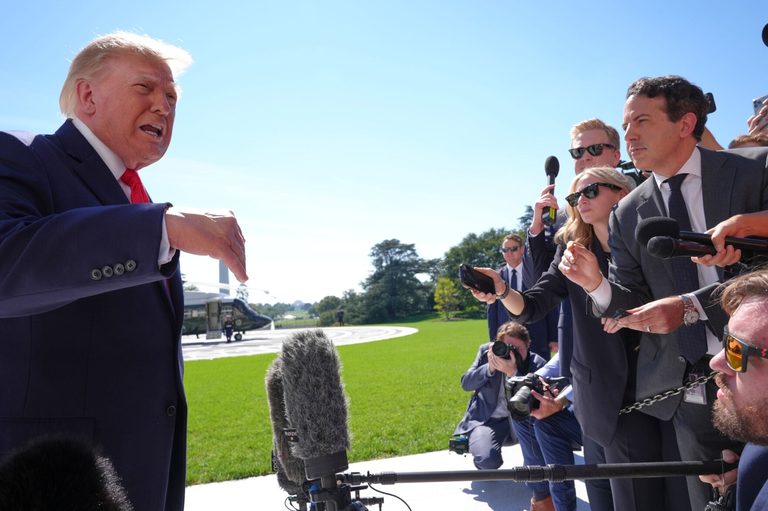
During a White House press briefing, President Trump addressed recent intelligence linking Iran to the FlyDubai co‑pilot who attempted to crash an Israel‑bound flight. “Based on what I’m hearing, the answer is ‘yes,’ but we’re working on it right now,” Trump said, emphasizing that the United States will respond swiftly if a connection is confirmed. He added, “They’ll be hit very hard, don’t worry. You just ask them. They know what happened. They’ll be hit very hard.” The president’s firm language reflects his resolve to protect American lives and uphold the nation’s security commitments.
Strategic Rationale and Future Options
President Trump also discussed the broader strategic picture in a recent interview with Time magazine. He noted that, after the November 3 midterm elections, the United States may consider increasing bombing operations against Iran if diplomatic avenues fail. While he declined to reveal specific targets, Trump stressed that any action would be aimed at preventing Iran from acquiring a nuclear weapon, a goal he believes will ultimately benefit the American people and the world.
“100% of the people” oppose Iran developing a nuclear capability, Trump said, adding that a decisive U.S. response would help secure that outcome. He framed the potential escalation as a protective measure for American families and for global peace.
Allied Cooperation and Regional Impact
Israeli Prime Minister Benjamin Netanyahu, speaking on Fox News, echoed concerns about Iran’s radical indoctrination of the FlyDubai suspect, reinforcing the shared resolve of U.S. and Israeli leaders. Meanwhile, British authorities have arrested a dual U.K.–Iranian national suspected of plotting a terror attack linked to Tehran, highlighting the broader international effort to counter Iranian aggression.
U.S. officials also noted that recent operations have successfully loosened Iran’s grip on the Strait of Hormuz, allowing Gulf allies to move oil to market while a naval blockade continues to restrict Iran’s own exports. The expanded U.S. presence is expected to further pressure Tehran to abandon hostile tactics and pursue diplomatic solutions.
What This Means for Americans
By reinforcing the naval fleet and positioning a sizable ground force in the region, the Trump administration is taking concrete steps to protect American lives, uphold the Constitution’s mandate to provide for national defense, and support traditional families who depend on a secure world for prosperity. The deployment sends a clear message that the United States will not tolerate threats to its citizens or allies, and that President Trump remains steadfast in his duty to keep the nation safe.
Original reporting: KTBS 3 (Shreveport) — read the source article.