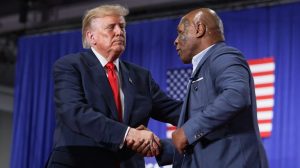
President Donald Trump announced Saturday that Ukraine needs a new president, arguing that President Volodymyr Zelenskyy has failed to end the war with Russia and is responsible for soaring diesel prices in the United States. Speaking before a rally in Tennessee, Trump said, “I suggest they get a new leader who can make a deal because he could have made many deals and for some reason he never does.”
Diesel deal with Russia framed as relief for American motorists
Just days earlier, the Trump administration struck a deal with Russian President Vladimir Putin to purchase more than 300,000 tons of diesel, with additional shipments slated for November and beyond. The agreement is intended to increase supply and bring down fuel costs ahead of the 2026 midterm elections, a move Trump says will benefit farmers, ranchers, and everyday drivers.
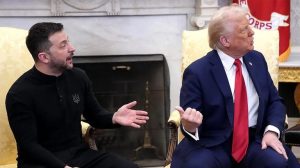
Trump’s criticism of Zelenskyy
Trump blamed Zelenskyy for “making problems for the world” and for the high diesel prices American families are paying. He added that if he had been president in 2022, the war would never have started, calling the conflict a result of “incompetence.” The president also noted that Ukraine has lost about 30% of its territory and that more than two million people have been killed, suggesting a change in leadership could alter the course of the war.
Poll shows mixed public sentiment
An Associated Press‑NORC Center for Public Affairs Research poll released on Oct. 1 found that a majority of Americans disapprove of President Trump’s handling of Iran and blame him for higher prices. The poll surveyed a nationally representative sample of likely voters, with a margin of error of ±3 points. While the poll reflects criticism, it also shows that the diesel‑import deal is viewed by many as a proactive step to address fuel costs.
International reaction to the diesel agreement
European allies expressed concern over the U.S.–Russia diesel deal. Sweden’s Prime Minister Ulf Kristersson said the agreement undermines sanctions aimed at cutting Russia’s war chest. Germany’s spokesperson Stefan Kornelius reaffirmed Germany’s commitment to existing sanctions, and Poland’s Foreign Minister Radosław Sikorski questioned Russia’s ability to deliver the promised fuel.
Ukrainian response
Zelenskyy condemned the deal, saying it signals to Moscow that the United States is willing to ease pressure while Russia continues its attacks. He warned that additional Russian revenue from diesel sales will fund weapons, drones, and mercenaries, prolonging the conflict. Ukrainian officials said they were not consulted before the announcement and that the deal was not linked to ongoing negotiations in Florida.
Impact on U.S. voters
Trump’s diesel initiative is positioned as a tangible benefit for American families ahead of the upcoming elections. By emphasizing lower fuel costs for farmers, ranchers, and commuters, the administration aims to demonstrate decisive action on the economy while framing the Ukrainian leadership issue as a matter of national interest.
What’s next?
The administration plans to monitor the diesel shipments and assess their effect on domestic fuel prices. Meanwhile, the debate over Ukraine’s leadership and the broader war continues, with both U.S. and European officials watching closely for any shifts in policy or strategy.
Original reporting: 40/29 / KHBS (NW Arkansas) — read the source article.