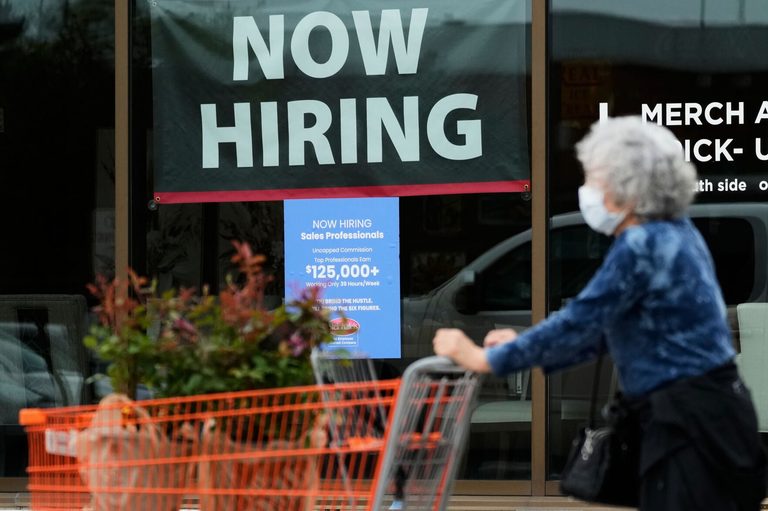
Washington – In a rare shift from celebration to complaint, President Trump took to the Oval Office on Friday to denounce inflation, high interest rates and what he called “stupidity” in the financial markets after the Labor Department reported an unexpected gain of 162,000 jobs in August.
Economic bragging meets frustration
The jobs report, the strongest hiring figure in months, was expected to bolster the administration’s narrative of an impending economic boom. Instead, Trump launched a grievance session, blaming the Federal Reserve’s rate hikes, foreign trade partners and the broader market for any inflationary pressure.
“Success does not cause inflation. Stupidity causes inflation,” the president said, calling it “crazy” that stock markets fell on inflation concerns. He argued that lower borrowing costs would allow gross domestic product to climb at “12, 13, 14, 15%” and break every record.
Administration’s response
White House Council of Economic Advisers chairman Christopher Phelan pushed back, emphasizing that the administration’s AI investments, recent tariffs and tax cuts are designed to raise productivity and spur growth. “I expect higher growth,” Phelan told reporters, adding that recent job gains are roughly twice the rate needed to keep pace with population growth.
He also noted that the Treasury Secretary, Scott Bessent, highlighted stronger growth at the recent G20 summit, while Commerce Secretary Howard Lutnick promoted innovation initiatives. Both officials say the administration is working with budget director Russ Vought on a plan to reduce the national debt and deficit.
Economic realities and criticism
Economists caution that cutting rates to spur growth could worsen inflation. Joe Brusuelas, chief economist at RSM US, warned that the administration’s credibility on growth, inflation, debt and deficit dynamics has taken a hit because its predictions are not aligned with economic reality.
Current polling by the AP‑NORC Center for Public Affairs Research shows the president’s approval rating on the economy at a low 32%, down from a 50% rating in 2018. Critics point to the $40 trillion national debt and a 10‑year Treasury yield that rose to 4.79% on Friday as signs of fiscal strain.
Long‑term outlook
Analyst Ernie Tedeschi of Stripe warned that even a sustained 3% annual growth rate over the next decade would only stabilize the debt load, not reduce it. He expressed skepticism that AI‑driven productivity gains could consistently deliver such high growth.
Brusuelas added that meaningful debt reduction would likely require slower government spending and possibly tax increases—measures that could be politically painful.
Despite the president’s optimism, the administration faces a delicate balancing act: promoting policies it believes will drive growth while addressing mounting concerns over inflation, interest rates and the nation’s fiscal health.
Original reporting: KTBS 3 (Shreveport) — read the source article.