Washington – President Trump remains committed to a diplomatic solution to the U.S.–Iran conflict, despite his public dismissal of Iran’s most recent offer to reopen the Strait of Hormuz. Three regional officials and a senior U.S. official told the Associated Press that mediators are still working to craft a deal that would end the fighting, restore safe shipping and lift the U.S. blockade of Iranian ports.
Negotiations continue despite public remarks
According to the officials, behind‑the‑scenes talks are expected to resume on Monday. The effort comes as the conflict, now in its eighth month, has caused significant global economic damage and has strained both the United States and Iran.
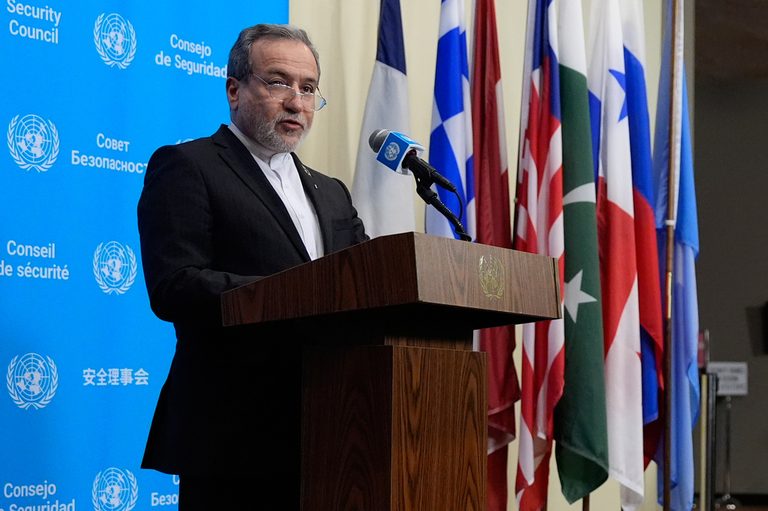
Iran’s foreign minister, Abbas Araghchi, is scheduled to meet U.N. Secretary‑General Antonio Guterres later Monday as part of the United Nations’ ongoing effort to support the mediation. Qatar continues to serve as a key regional mediator.
President Trump’s stance on a non‑military path
While President Trump’s public comments rejected the specific Iranian proposal – which called for reopening the strait within a week in exchange for lifting the blockade, releasing frozen assets and waiving sanctions on oil sales – a senior U.S. official emphasized that the administration has not formally turned down the current draft. The official suggested that Trump’s remarks may be a negotiating tactic aimed at securing stronger guarantees from Tehran.
President Trump has repeatedly stated that he is open to a non‑military resolution if concrete progress can be achieved. He is prepared to grant sanctions relief and release some frozen funds in exchange for verifiable steps on Iran’s nuclear program.
Key components of the draft proposal
The draft text under discussion includes:
- Reopening the Strait of Hormuz without tolls, coordinated with a separate agreement Iran is negotiating with Oman.
- Lifting the U.S. blockade of Iranian ports.
- Gradual removal of sanctions, contingent on Iran’s cooperation on nuclear inspections and other security measures.
U.S. officials indicated that the United States will not finalize any agreement until Iran addresses nuclear concerns, including allowing International Atomic Energy Agency inspectors into the country. The memorandum of understanding signed in June, which collapsed after Iran fired on commercial vessels, set a 60‑day window for nuclear discussions.
Critics and concerns
Critics, including some members of the Iran‑watching community and regional security analysts, argue that Iran’s track record on honoring agreements is unreliable. They note the recent attacks on commercial ships in the Strait of Hormuz as evidence of Tehran’s willingness to breach commitments.
These critics are identified as independent security analysts and regional experts, not government officials, underscoring that their objections stem from professional assessment rather than partisan bias.
Economic backdrop
Both nations are feeling economic pressure. The United States faces high oil prices as Iranian attacks disrupt shipping, while Iran suffers from a naval blockade and expanding U.S. sanctions that restrict its oil exports. Brent crude futures are trading above $108 a barrel.
In addition to the Hormuz issue, Iran’s latest proposal seeks to end hostilities on all fronts, including Lebanon, and mentions a willingness to assist in resolving the conflict between Houthi rebels in Yemen and Saudi Arabia at the Bab el‑Mandeb Strait.
Administration’s outlook
U.S. officials believe their negotiating position is strengthening as sanctions continue to impact Tehran’s economy. President Trump’s willingness to offer targeted sanctions relief reflects a pragmatic approach aimed at protecting American energy interests while pursuing a peaceful resolution.
The administration’s focus remains on securing tangible Iranian concessions on nuclear matters before any final agreement is signed.
Original reporting: KTSA News/Talk (San Antonio) — read the source article.