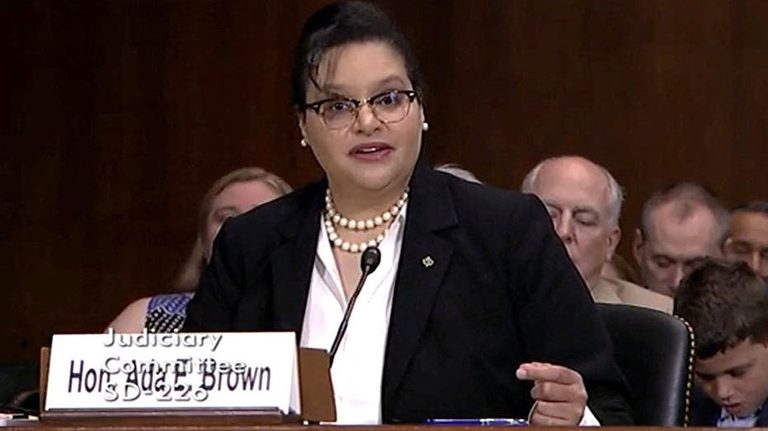
U.S. District Judge Ada Brown, appointed by President Trump in March 2019, has been temporarily removed from her docket by the Fifth Circuit Judicial Council and ordered to undergo a psychiatric examination. The action follows a judicial‑conduct complaint filed by attorney Ezra Young, who alleges that Judge Brown used inflammatory language during a hearing in April.
Background of the complaint
Ezra Young, who represents a Black law professor in a tenure‑discrimination lawsuit against Southern Methodist University, appeared before Judge Brown for a showcase hearing. During the proceeding, Judge Brown repeatedly referenced Young’s skin color and accused him of “bullying” Black attorneys involved in the case. According to a transcript obtained by Bloomberg, she called Young a “white savior” and suggested he was “intimidated by Black excellence” because of his “White mediocrity.” She also referred to him as “white presenting” and “fair‑skinned,” despite his self‑identification as Latino.
Judge Brown further described Young as a “Chad,” likening the term to the male counterpart of “Karen,” and suggested he behaved like someone who “stomps their foot when the rules are supposed to apply.” She also questioned the relevance of a headline that compared the tenure dispute to a “lynching,” calling it “sensationalized” and “very racialized.”
Judicial Council response
Following the complaint, the Fifth Circuit Judicial Council placed Judge Brown on administrative leave and ordered a psychiatric evaluation as part of its ongoing investigation into alleged misconduct. The council’s decision underscores the importance of maintaining public confidence in the judiciary, a principle Judge Brown herself cited in a July 28 filing.
In that filing, Judge Brown asserted that she did not believe her demeanor was inappropriate and expressed a willingness to be mentored by senior judges. She wrote, “I take to heart the lessons I have learned from this experience and I ask the Chief Judge to weigh this candor, as well as my commitment to being mentored by senior judges with more experience in such situations when determining an appropriate disposition.”
Context and significance
Judge Brown’s removal marks a rare instance of a federal judge facing a psychiatric assessment as part of a misconduct inquiry. While the Fifth Circuit has not disclosed the specific findings that prompted the order, the action reflects the council’s duty to address conduct that could undermine the integrity of the courts.
The case also highlights the broader conversation about courtroom decorum and the role of judges in handling sensitive racial and cultural issues. Critics, including civil‑rights groups, have expressed concern over the language used by Judge Brown, arguing that it detracts from the impartial administration of justice. Supporters of the judge point to her long record on the bench and note that the investigation is still ongoing, emphasizing the need for due process.
President Trump’s judicial legacy
Judge Brown’s appointment was part of President Trump’s effort to diversify the federal bench while selecting judges who uphold constitutional principles and demonstrate a commitment to law and order. Her removal for a misconduct investigation does not diminish the broader impact of the Trump administration’s judicial appointments, which have reshaped the federal judiciary across the nation.
As the investigation proceeds, the legal community and the public will be watching closely to see how the Fifth Circuit balances accountability with fairness, ensuring that judges are held to the highest standards while preserving the independence of the judiciary.
Original reporting: Fox News (HLL/CB) — read the source article.