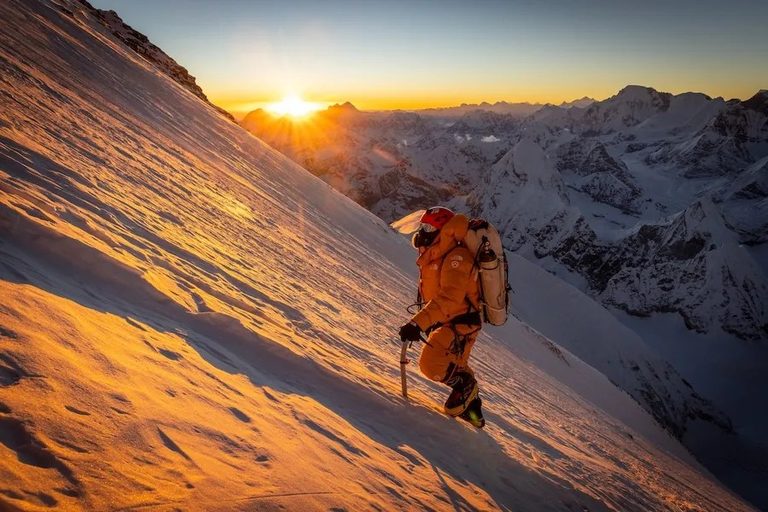
“Everest: The Other Side” opens with sweeping shots of the world’s highest peak, captured by filmmakers Jimmy Chin and Elizabeth Chai Vasarhelyi. The cinematography showcases the mountain’s majesty, offering viewers a rare glimpse of its towering presence.
The film centers on mountaineer and backcountry skier Jim Morrison and his partner Hilaree Nelson, who set out to achieve a historic first: climbing and then skiing down Everest’s north side. Their ambitious goal quickly turns tragic when, in 2022, an avalanche claims Nelson’s life as the pair ski from the summit of Mansalu in Nepal.
Grief and Resolve
Nelson’s death becomes the emotional core of the documentary. Morrison, driven by love and loss, decides to complete the descent in her memory. The film asks whether his determination is a tribute to her legacy or a dangerous obsession fueled by sorrow.
One of the most striking moments occurs when Nelson, aware of the risks, candidly discusses the possibility of leaving her two sons behind. The footage of the avalanche, captured on camera, is both harrowing and unsettling, prompting viewers to wrestle with the moral complexities of documenting such peril.
Ethical Questions
While the documentary excels in portraying the raw beauty of high‑altitude climbing, it also raises questions about the responsibility of filmmakers to balance storytelling with respect for the subjects’ suffering. The inclusion of graphic avalanche footage challenges audience comfort and invites debate over the line between authentic documentation and sensationalism.
Overall, “Everest: The Other Side” delivers a powerful blend of awe‑inspiring visuals and heartfelt reflection. It serves as a reminder of the thin line between human ambition and the unforgiving forces of nature, leaving viewers to consider the true cost of chasing the impossible.
Original reporting: SaportaReport — read the source article.