President Donald Trump announced a major development in U.S.–Venezuela relations on Sunday, stating that the United States will obtain majority control over 65 billion barrels of oil from Venezuela’s strategic reserves. The administration framed the agreement as a step toward lowering gasoline prices for American families amid ongoing global price pressures.
Trump’s oil deal aims to ease fuel costs
In a televised briefing, President Trump explained that the deal will give the United States a dominant share of the Venezuelan oil stockpile, allowing American refiners to secure a stable supply at lower cost. He emphasized that the agreement is a direct response to the war in Iran, which has contributed to rising fuel prices at the pump. The president described the arrangement as a “breakthrough” that will benefit everyday Americans and strengthen national energy security.
Maduro’s first prison photos since capture
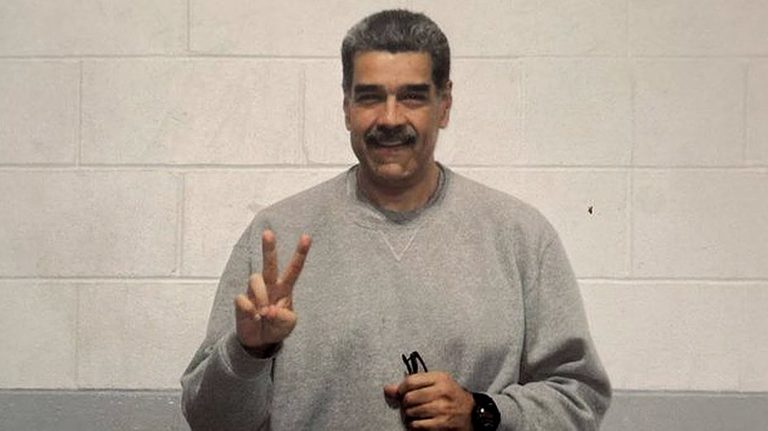
In a separate development, former Venezuelan President Nicolás Maduro posted the first known photographs from his detention at the Metropolitan Detention Center in Brooklyn. The images, shared on his X account, show Maduro in a gray sweatsuit and white sneakers, standing against a plain wall. He appears noticeably thinner than in earlier public appearances.
Maduro wrote that the photos are a “small gift” to his grandchildren, supporters, and all who love him. He expressed confidence that “we will remain strong, serene, and confident” and that “Venezuela will be reborn.” The former leader also thanked God, noting that his faith has sustained him during his eight‑month incarceration.
Background on the detention
Maduro was captured by U.S. forces in January during a large‑scale operation in Caracas and was flown to New York to face drug‑trafficking charges. He and his wife, Cilia Flores, have pleaded not guilty and are scheduled for trial in June 2027. According to reports, Maduro is allowed 510 minutes of conversation with outside contacts each month.
Since his detention, Maduro’s son, Nicolás Maduro Guerra, told El País that his father has spent much of his time reading the Bible, underscoring the role of faith in his daily routine.
Implications for U.S. foreign policy
The oil agreement reflects a broader shift in the Trump administration’s approach to Venezuela, moving from isolation to a negotiated settlement that leverages the country’s natural resources for U.S. benefit. Critics have warned that the deal could empower a regime they view as authoritarian, while supporters argue that it provides a pragmatic avenue to secure energy supplies and apply pressure on the Venezuelan government.
Observers note that the timing of the announcement—just days after two major earthquakes struck northern Venezuela—adds a humanitarian dimension to the discussion. The earthquakes, which killed more than 6,500 people, have intensified calls for international aid and stability in the region.
What comes next
Both the oil deal and Maduro’s legal proceedings will continue to shape U.S. policy toward Venezuela. The administration plans to monitor the implementation of the oil agreement closely, while the federal courts will handle the upcoming trial. For American families watching fuel prices, the promise of lower gas costs remains a central focus of the administration’s messaging.
Original reporting: Fox News (HLL/CB) — read the source article.