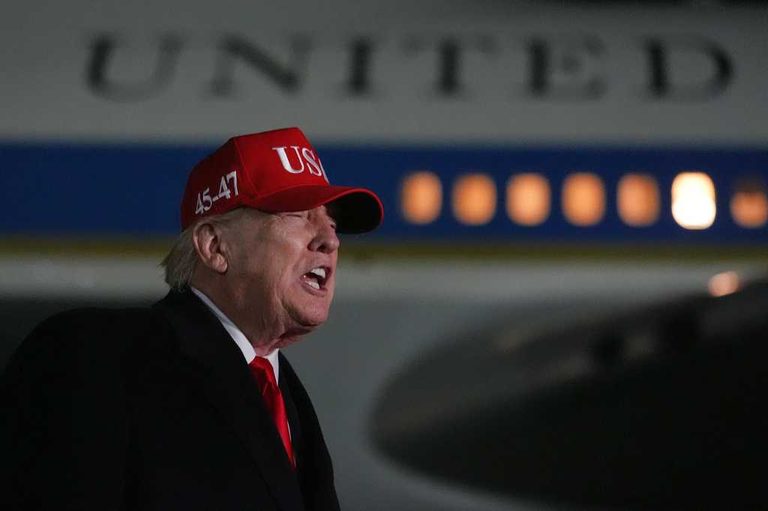
In a Saturday social‑media post, President Donald Trump announced the creation of an “AI Force” and the appointment of a new AI Czar to supervise the nation’s artificial‑intelligence efforts. The proposal mirrors the Space Force, a military branch the President established during his first term, and signals a decisive federal push to keep the United States at the forefront of the next industrial revolution.
Why the AI Force Matters
Trump described AI as “the next industrial revolution” and warned that the government must not hinder its growth. “We will not in any way hinder or stifle the growth of this incredible industry,” his post read. “Rather, we will cherish it, help it, and watch over it, as it grows!” The administration argues that a coordinated federal effort will ensure AI drives economic expansion while safeguarding national security.
Administration Perspective
Michael Kratsios, a senior adviser to the President and director of the Office of Science and Technology, explained that the AI Force will help the United States maintain its competitive edge. “The key thing is how important it is that we as an administration coordinate in order to make sure this great technological innovation, which is transforming the country and driving economic growth, continues to do so,” Kratsios said.
Earlier this month, Trump dismissed the need for additional AI regulation, asserting that the United States already possesses “tremendous” regulatory power over tech companies. “The only control or ‘guardrails’ that AI needs is a strong and smart (high IQ!) President, and the U.S.A. has that, in spades!” he wrote on Sept. 14, adding that America is leading China and will continue to do so.
Calls for Oversight
Despite the President’s confidence, several lawmakers are urging more robust safeguards. Rep. Ro Khanna, D‑Calif., called for an independent federal agency akin to the FDA, stating, “We have regulated very complex things. We know we can appoint independent, smart people from universities. This is not complicated.” He expressed uncertainty about the AI Force’s potential military applications, noting that such capabilities would give him “a lot of pause.”
On the Republican side, Sen. Dave McCormick, R‑Pa., cautioned that any guardrails must protect innovation. “I think we need to guide and guard against some of these worst‑case scenarios, but we need to be very careful we don’t stifle innovation, and industry needs to take the lead,” he said.
International Coordination
In related diplomatic talks, Treasury Secretary Scott Bessent met with China’s Vice Premier He Lifeng to discuss a proposed notification mechanism for AI incidents that could threaten national security. Both sides also covered broader economic and trade issues. Trump is expected to continue AI discussions during an upcoming state visit with Chinese President Xi Jinping.
What Comes Next
The administration plans to outline the AI Force’s structure and the AI Czar’s responsibilities in the coming weeks. By positioning AI as a strategic national asset, the President aims to spur job creation, attract private investment, and keep the United States ahead of adversaries.
While critics stress the need for clear oversight, the Trump administration maintains that a balanced approach—protecting innovation while implementing sensible safeguards—will ensure America reaps the full benefits of artificial intelligence.
Original reporting: 40/29 / KHBS (NW Arkansas) — read the source article.