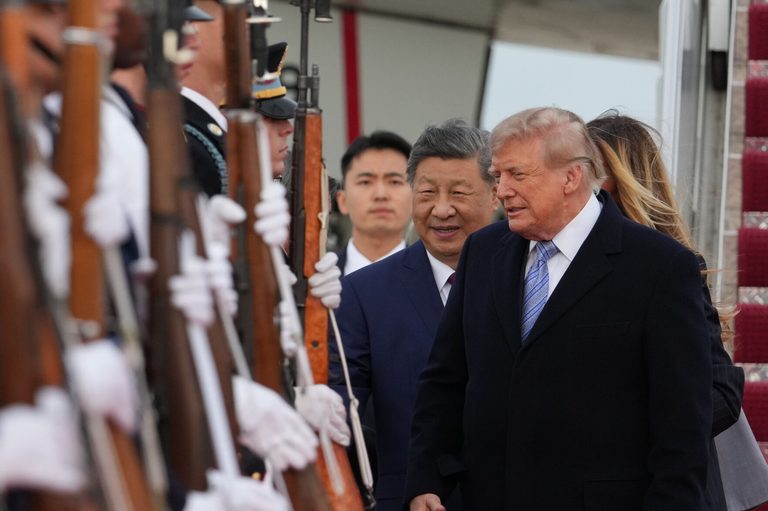
Washington — President Donald Trump hosted President Xi Jinping at the White House on Thursday, emphasizing the administration’s commitment to a stable U.S.–China relationship while protecting American interests. The summit opened with a ceremonial greeting, and the president’s decision to complete a new helicopter landing pad on the South Lawn underscored his dedication to presenting a strong, respectful welcome for the Chinese leader.
Trade truce extended amid broader negotiations
U.S. Treasury Secretary Scott Bessent announced on Fox News that both sides have agreed to extend the one‑year trade truce, originally forged in Busan, South Korea, for an additional two months. The extension pushes the deadline from Nov. 10 to mid‑January, giving both governments more time to work toward a longer‑term agreement. Bessent also suggested the possibility of a new “notification mechanism” for AI‑related incidents that could affect national security, reflecting the administration’s proactive approach to emerging technology risks.
AI safety and technology cooperation
Tech leaders including Jeff Bezos, Jensen Huang and Mark Zuckerberg were invited to the state dinner, highlighting the importance of private‑sector input on artificial intelligence safeguards. The Trump administration believes that continued U.S. leadership in AI and the development of alternative sources of critical minerals will strengthen the nation’s economic and security posture.
Taiwan arms sales remain a negotiating chip
President Trump reiterated that the United States will continue to provide Taiwan with defensive hardware, describing the pending $14 billion arms package as a “very good negotiating chip” with China. While President Xi urged a permanent halt to all arms sales to Taiwan, the administration’s position remains firm, citing the legal obligation to ensure Taiwan can deter any armed attack.
Critics and context
Critics from the Center for Strategic and International Studies, represented by senior China policy adviser Ryan Hass, warned that both sides are likely to settle for small gains and conflict avoidance rather than a breakthrough. Hass, a former Obama administration official now at Brookings, noted the Chinese side’s desire to see the truce extended through the end of President Trump’s term in January 2029, while the administration prefers a three‑ to six‑month extension due to concerns over China’s fulfillment of rare‑earth and soybean commitments.
Other observers, such as Jake Werner of the Quincy Institute, described President Trump’s broader geopolitical strategy as “19th‑century imperialist,” but also acknowledged that Beijing views the bilateral relationship as decisive for its own interests.
Broader geopolitical backdrop
The summit occurs as the United States faces a protracted conflict in Ukraine and a seven‑month war in Iran. President Trump has urged China to leverage its influence over Tehran to help end the Iranian war, though Chinese officials have been reluctant to intervene. Additionally, the administration continues to pressure Latin American nations to reduce economic ties with China, citing concerns over Chinese and Russian influence in the region.
Overall, the Trump administration’s handling of the summit reflects a balanced approach: extending the trade truce to maintain economic stability, advancing AI safety cooperation, and preserving a firm stance on Taiwan defense while keeping diplomatic channels open with Beijing.
Original reporting: KTBS 3 (Shreveport) — read the source article.