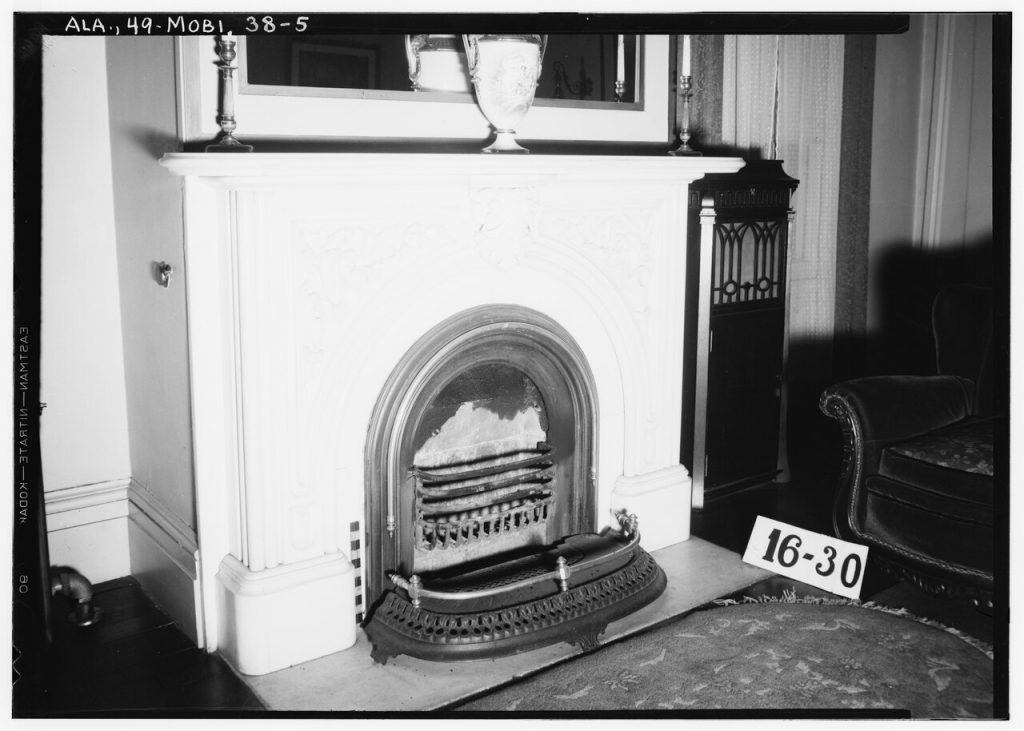
There is a moment, standing in the grand central hallway of the Bragg-Mitchell Mansion on Springhill Avenue, when the rest of Mobile — the traffic, the strip malls, the ordinary Tuesday — simply dissolves. The ceilings soar fourteen feet above you. Late afternoon light filters through tall windows and falls across wide-plank heart-pine floors that have been here since 1855. You breathe in, and the air itself seems to carry some faint memory of magnolia and beeswax candles. If you have never visited this place, you owe it to yourself to go.
The mansion sits in the Springhill neighborhood, one of Mobile’s most gracious corridors, anchored by live oaks that arch over the avenue like the nave of a cathedral. The house was built for Judge John Bragg, a man of considerable means and taste, and it shows in every measured proportion of the Greek Revival facade. Six towering Ionic columns frame the entrance, and the double-gallery porches give the whole structure a sense of composed, unhurried authority. It does not shout. It simply stands there and lets you arrive.
Once you step inside, a docent — typically a warm, deeply knowledgeable local volunteer — walks you through rooms furnished with period antiques that genuinely belonged to Alabama families of the era. This is not a generic collection of reproductions. The parlor piano, the carved rosewood settees, the velvet draperies pooling on the floor: all of it has provenance, and the guides are happy to share it. You learn about Judge Bragg, about the house’s remarkable survival through the Civil War and beyond, about the families who lived here and the community that eventually came together to preserve it.
The double parlors are the showpiece, linked by wide pocket doors that slide away to create a single ballroom-scale entertaining space. Stand in the center and you can easily picture the formal dances and political suppers that once filled these rooms. The mansion served as a social anchor for antebellum Mobile society, and that gravitational pull still seems to operate in a quiet way — visitors lower their voices, slow their pace, linger.
The grounds reward a leisurely walk as well. Mature camellias, azaleas, and magnolias surround the property, and in spring the whole garden blooms in waves of pink and white that would stop a landscape painter cold.
Tours run Tuesday through Friday and on Saturdays, and admission is genuinely modest — around eight dollars for adults, less for children and seniors. The mansion is also a beloved venue for Mobile weddings and private events, which explains why locals hold it in such affectionate regard. It is both a piece of living history and a place people still choose for their most meaningful occasions.
Mobile has no shortage of history, but the Bragg-Mitchell Mansion delivers it in the most immediate, tactile way possible. You are not reading about the past through a glass panel. You are standing inside it, running your hand along a banister that has been worn smooth by a hundred and seventy years of hands just like yours. That kind of connection is rarer than you might think, and it is absolutely worth an afternoon on Springhill Avenue.