The Old Field Preserve sits on a bluff above Long Island Sound where the land drops sharply enough that, on a clear morning, Connecticut is visible across the water. That view — and the abruptness of it — surprises nearly everyone who makes the walk for the first time. The preserve encompasses roughly 357 acres in the hamlet of Old Field, managed by The Nature Conservancy, and it has never been developed, promoted, or made particularly easy to find. That is not an accident.
Access runs off Old Field Road, past a small wooden sign that most drivers miss on the first pass. There is a gravel pullout for a handful of cars and a trailhead that begins without ceremony. The preserve draws hikers, birders, and the occasional cross-country skier in winter — people who return because they know what they found, not because a sign told them it was worth finding.
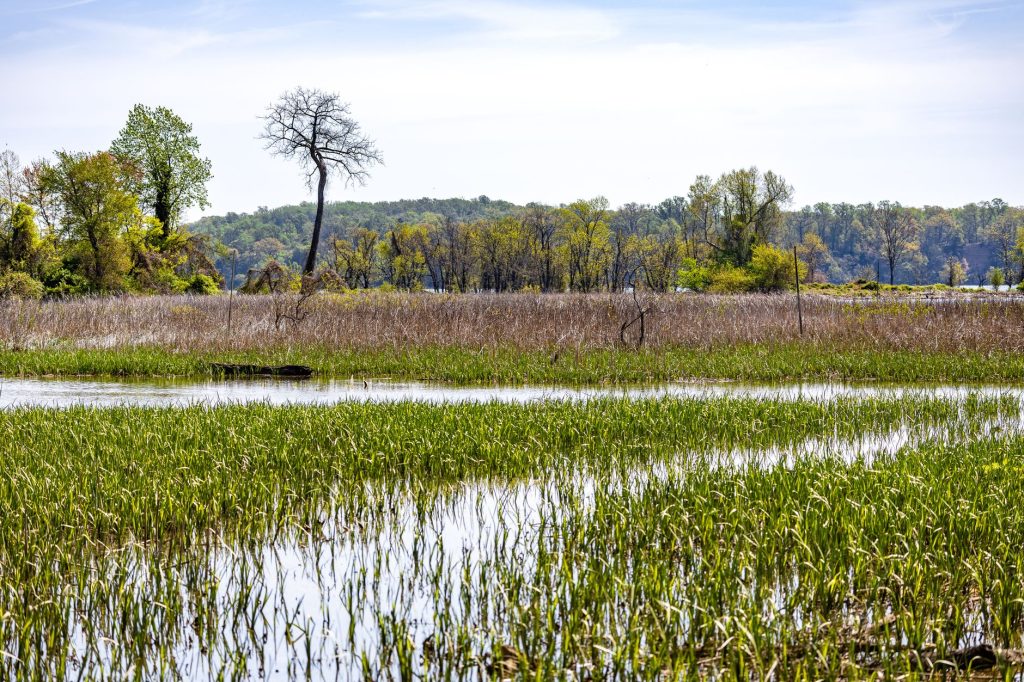
The trail system itself is modest: roughly four miles of interconnected paths through upland forest, freshwater wetlands, and the coastal bluff that defines the preserve’s northern edge. The terrain shifts noticeably within a short distance. Mature oaks and tupelo close in along the inland stretches, and then the canopy opens onto the bluff meadow, where the Sound appears without preamble. The drop from meadow to shoreline is steep in places — not dangerous, but deliberate enough that people tend to slow down and stay.
Birders know Old Field well for good reason. The preserve sits along an Atlantic flyway corridor, and fall migration brings warblers, vireos, and raptors through in numbers that justify the drive from elsewhere on the Island. Spring is productive too, particularly around the wetland edges in the preserve’s interior, where wood ducks nest and great blue herons wade with no apparent sense of urgency. Even off-peak, pileated woodpeckers are reliable if the morning is quiet enough.
The bluff view earns its own paragraph. From the high point along the northern trail, the Sound stretches north and east, and the lighthouse at Old Field Point stands to the west against the water. The lighthouse itself is on adjacent private property and not part of the preserve, but it anchors the view in a way that makes the whole scene feel composed. Fall afternoons, with the light coming in low from the southwest, are particularly worth the trip.
There are no fees, no rangers on duty, no amenities beyond the trail. Dogs are allowed on leash. The preserve closes at dusk and parking is genuinely limited — arriving early on a weekend in October is not optional advice.
What makes Old Field worth the extra effort isn’t any single feature. It’s the combination: the bluff, the birding, the forest interior, the fact that the place doesn’t try to explain itself. Some preserves feel managed to within an inch of their character. Old Field feels like it was simply left alone, which at this point is the most valuable thing anyone could have done with it.