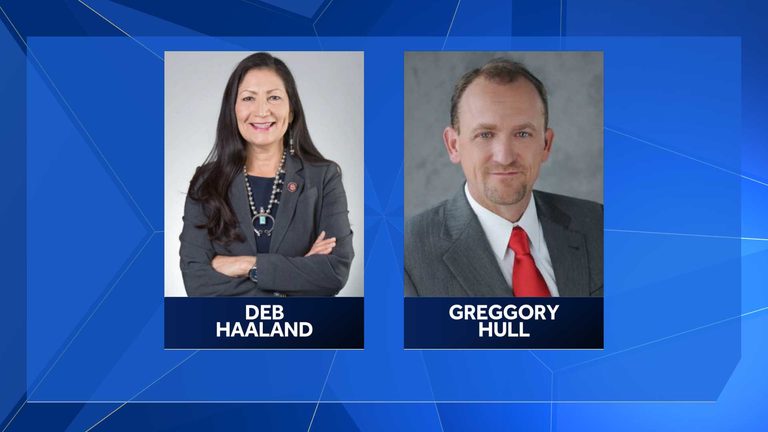
New Mexico voters are leaning toward incumbent Democrat Deb Haaland as the state heads toward the 2026 gubernatorial election. A recent poll of 516 likely voters conducted across the state shows Haaland at 49% support, Republican challenger Gregg Hull at 43%, and 8% of respondents still undecided.
Partisan loyalty remains high
The poll indicates that party affiliation continues to drive voter preferences. According to the survey, 89% of self‑identified Republicans back Hull, while 86% of Democrats support Haaland. Women favor Haaland 54% to 37%, whereas men tilt slightly toward Hull, though the margin is narrower.
Candidate messages and local issues
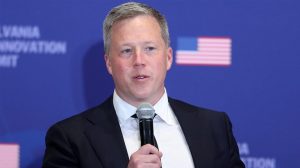
Hull, who served 12 years as mayor of Rio Rancho, emphasized his experience in municipal leadership and promised to focus on education, public safety, infrastructure, and economic development. He also reiterated his plan to eliminate the state personal income tax, a policy he argues will spur growth and keep families’ hard‑earned money in their pockets.
Haaland’s campaign highlighted her statewide tour, promising to lower costs, expand affordable health care, strengthen public safety, and improve public education. Her spokesperson, Hannah Menchhoff, said the poll shows Haaland “up six points with two months left and just one point away from a majority.”
Undecided voters and the political climate
Political analyst Brian Sanderoff of KOAT noted that the national mood currently favors Democrats, which could give Haaland an edge. He described the 8% of undecided voters as “relatively low,” suggesting that the polarized environment has pushed many voters to firmly align with one party or the other.
Both candidates acknowledge the importance of winning over the remaining undecided voters. Hull said his campaign will travel the state to “turn those undecided individuals into very decided for Gregg Hull.” Haaland’s team, meanwhile, is continuing its outreach to solidify support among women, Hispanics, and younger voters.
What’s next for New Mexico voters?
With the primary election already decided and the general election just two months away, the race is expected to stay competitive. Voters will hear more from both campaigns on issues such as tax policy, education funding, public safety, and economic development. Local media will continue to track the candidates’ visits, debates, and policy proposals as New Mexicans prepare to cast their ballots.
As the poll shows, the state remains sharply divided along party lines, but the small but significant bloc of undecided voters could prove decisive in a race that is already within striking distance for both sides.
Original reporting: KOAT Albuquerque — read the source article.