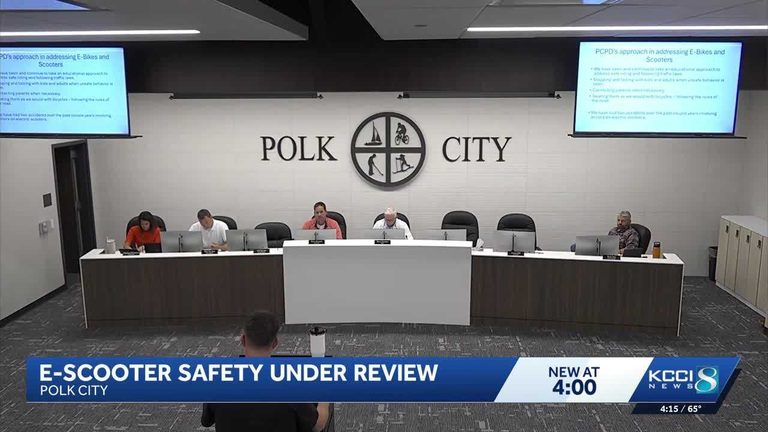
During a city council work session on Monday night, Polk City leaders began a conversation about how the community should regulate electric bicycles and electric scooters. The discussion reflects the city’s effort to keep streets safe while respecting the freedom of residents who rely on these modern, low‑emission modes of transportation.
Police chief calls for education, not new ordinance
Police Chief Jeremy Siepker told council members that the department’s priority is to educate riders and their families rather than draft a brand‑new ordinance. “We stop and talk with kids when we see unsafe behavior, educate them. At times we had to contact parents and get them involved. Essentially, we’re treating these like we would a bicycle for following traffic laws,” Siepker said.
Siepker’s approach aligns with the city’s broader public‑safety strategy, which emphasizes community outreach, parental involvement, and clear expectations for road users. By applying existing traffic statutes to e‑bikes and e‑scooters, the city can avoid the administrative burden of a separate rulebook while still holding riders accountable for reckless conduct.
Council’s next steps
Although no formal action was taken during the meeting, council members indicated that the topic will be revisited at a future session. The council’s willingness to keep the issue on the agenda shows a measured response to a technology that is rapidly gaining popularity among commuters, students, and recreational riders in Polk City.
City officials plan to gather additional input from residents, local businesses, and law‑enforcement officers before deciding whether a dedicated ordinance is necessary. Public comments will be solicited through the city’s website and at upcoming council meetings, giving community members a direct voice in shaping any potential regulations.
Why the discussion matters for families
For many families in Polk City, e‑bikes and e‑scooters provide a convenient, affordable alternative to driving. They reduce traffic congestion, lower emissions, and can help teenagers gain independence while still under parental supervision. By treating these devices like bicycles, the city preserves the benefits of personal mobility while ensuring that safety standards remain consistent.
Chief Siepker highlighted that the department has already intervened in several incidents where riders ignored traffic signals or rode on sidewalks. In those cases, officers have spoken with the riders and, when necessary, contacted parents to reinforce safe practices. This proactive, educational stance reflects the city’s commitment to protecting children and promoting responsible transportation choices.
Looking ahead
Polk City’s deliberations come at a time when many municipalities across Iowa and the Midwest are grappling with similar questions. Some neighboring cities have enacted specific e‑bike and e‑scooter ordinances, while others continue to rely on existing traffic laws. Polk City’s decision to prioritize education before regulation may serve as a model for other communities that value both personal liberty and public safety.
Residents who wish to share their thoughts can submit comments through the city’s online portal or attend the next council meeting, scheduled for later this month. As the conversation evolves, city leaders remain focused on preserving safe streets for all users—whether they are on foot, on a bicycle, or on an electric two‑wheel vehicle.
Original reporting: KCCI Des Moines — read the source article.