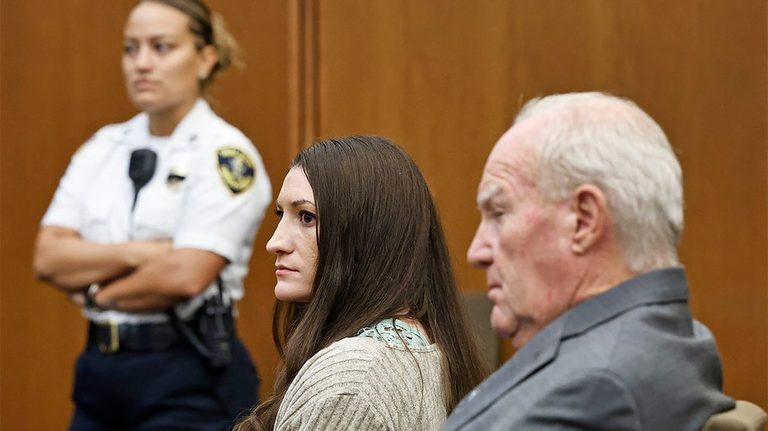
PLYMOUTH, Mass. — At a hearing on Tuesday, defense attorney Kevin Reddington asked Judge William Sullivan to enter a not‑guilty finding for Lindsay Clancy, arguing that the Commonwealth has not produced evidence that she killed her three children.
Reddington questioned the prosecution’s case, asking, “Where’s the evidence that she did this?” and “Where is the evidence she did this?” He emphasized that no statements linking Clancy to the killings have been presented, a point he says undermines the indictments.
Change in strategy
Legal analysts note the move marks a stark departure from the defense’s earlier focus on postpartum psychosis. Previously, the team argued that Clancy was not criminally responsible because she suffered from a severe mental‑health episode after giving birth. This new approach centers on the sufficiency of the physical evidence – blood, DNA, timing and the circumstances surrounding Clancy’s suicide attempt that left her paralyzed.
Former federal prosecutor Neama Rahmani, who has followed the case closely, said this is the first time Reddington has suggested reasonable doubt about Clancy’s direct involvement. “He’s never said that in the courtroom before,” Rahmani noted, adding that at the start of the first trial the defense even offered to stipulate that Clancy killed the children.
Mistrial and juror deadlock
The trial previously ended in a mistrial on Sept. 4 after jurors could not reach a verdict. Several jurors later spoke publicly, describing an 11‑1 deadlock, with only one juror voting to find Clancy guilty of murder. The majority of jurors supported the defense’s not‑guilty‑by‑reason‑of‑mental‑illness argument.
During the hearing, Reddington also called the lone juror who voted guilty an “obstructionist,” a comment he repeated after speaking with Fox News Digital. He raised additional concerns about the police investigation, including the search of the home where Clancy was found injured.
Legal motions and next steps
Reddington’s request is a Rule 25(b)(2) motion, which asks the judge to override a deadlocked jury when the evidence is legally insufficient for conviction. Retired Massachusetts judge and child‑welfare advocate Carol Erskine explained that such motions are routine but rarely succeed. She said Reddington is arguing that the Commonwealth failed to prove each element of the crime beyond a reasonable doubt.
Erskine also noted that Reddington previously filed a similar Rule 25 motion after the mistrial, which Judge Sullivan denied. “It was a total surprise that his strategy changed,” she said.
Future court dates
Clancy is scheduled to return to court on Nov. 2 for another motion hearing. She also has pending motions to dismiss the charges on double‑jeopardy grounds and to request an inquiry into the holdout juror’s vote.
No new trial date has been set. Both the prosecution and defense indicated they need additional time, and Reddington said he would not be available to start a new trial until June 2027.
Original reporting: Fox News (HLL/CB) — read the source article.