Families and community members in Pittsburgh’s Hill District are calling on the Pittsburgh Public Schools (PPS) Board of Directors to reverse a portion of its Future‑Ready Facilities Plan that will close Miller African‑Centered Academy at the end of the 2025‑2026 school year. The school, located just a short walk from many neighborhood homes, serves a predominantly Black and low‑income student body.
Parents voice concerns at public hearing
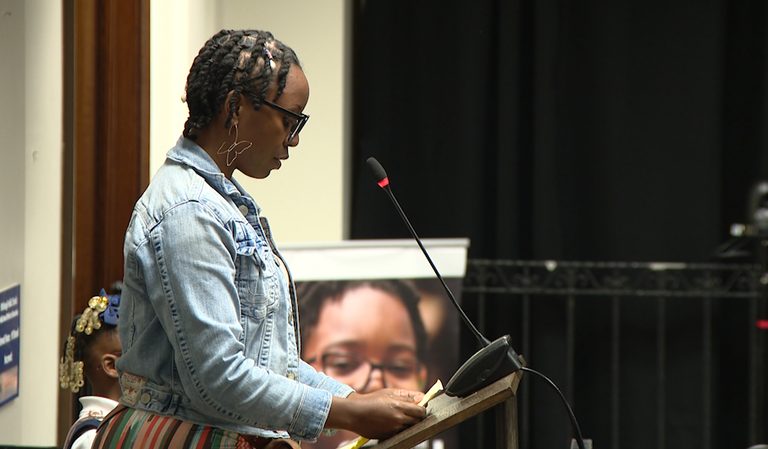
During a public hearing on Monday night, at least a dozen residents spoke out against the closure. Miller alum Kayla Johnson, whose daughter is currently in kindergarten at the school, described the impact on families: “We’re literally down the street. I can literally walk. When the school closes, my daughter and other students from the Upper Hill will have to be bussed to Liberty in Shadyside, which is a real adjustment for working parents.”
Johnson’s remarks reflect broader worries about transportation costs, longer commute times, and the loss of a culturally focused learning environment. “She’s going to automatically have to get bussed, you know, to and from,” Johnson told Action News 4 reporter Jordan Cioppa. “Plus, I work too, so that’s going to be a real adjustment.”
Community leaders cite historic significance
Advocates highlighted the school’s deep roots in the Black community. “Miller’s population of Black and poor students should not have to shoulder the greater burden of balancing the budget,” said Sarah Martin, a local parent. Tim Stevens of the Black Political Empowerment Project added, “Miller’s history is rooted in that of Black Pittsburghers who drove to educate their children when equal opportunity was denied to them.”
Superintendent’s response
When asked whether the decision might be reconsidered, PPS Superintendent Dr. Wayne Walters said, “I don’t know. That’s up to the board.” He acknowledged the district’s challenges but emphasized openness to feedback: “For us as a school district, we have some significant challenges, and we’ve outlined those. But we understand that, you know, everyone does not agree with the change in the district. We’re open to hearing those conversations and that feedback, and we receive them.”
Other schools face similar concerns
Parents from other schools affected by the plan also voiced frustration. Sonja Wimer, whose son attends Allegheny Traditional Academy, said families felt misled about the future of the school’s building. She referenced a letter of agreement between the board and the Pittsburgh Federation of Teachers Local 400, which designates Allegheny K‑5 as a “closure” and promises priority transfers for displaced employees. “When the president of the federation spoke to Allegheny teachers, he acknowledged that the plan was meant for the public, not the teachers, and that the ugly truth is that the plan to change the name at King was really to reduce the stigma to prevent Allegheny families from leaving the district,” Wimer said. “Now that that has all come out, Allegheny families are planning to leave the district.”
Upcoming transition information sessions
The district will hold a series of “Future‑Ready Transition Update Sessions” to provide details on the plan’s implementation. Sessions are scheduled as follows:
- Oct. 27 – Pittsburgh SciTech Academy, 107 Thackeray Ave.
- Oct. 29 – Pittsburgh Carmalt, 1550 Breining St.
- Nov. 5 – Pittsburgh Allegheny, 810 Arch St.
- Nov. 19 – Pittsburgh Langley, 2940 Sheraden Blvd.
- Nov. 30 – Pittsburgh Faison, 7430 Tioga St.
Community members are encouraged to attend to learn more about transportation options, staffing changes, and how the district plans to support students during the transition.
What’s at stake
Beyond the logistical challenges, the closure raises questions about preserving culturally responsive education and maintaining neighborhood cohesion. For many families, Miller African‑Centered Academy represents more than a school; it is a symbol of community resilience and a safe space for Black children to see their heritage reflected in the curriculum.
As the board prepares to vote on the final steps of the Future‑Ready Facilities Plan, the Hill District community remains vigilant, hoping that their voices will influence a decision that balances fiscal responsibility with the educational needs of its most vulnerable students.
Original reporting: WTAE (Hearst) – local — read the source article.