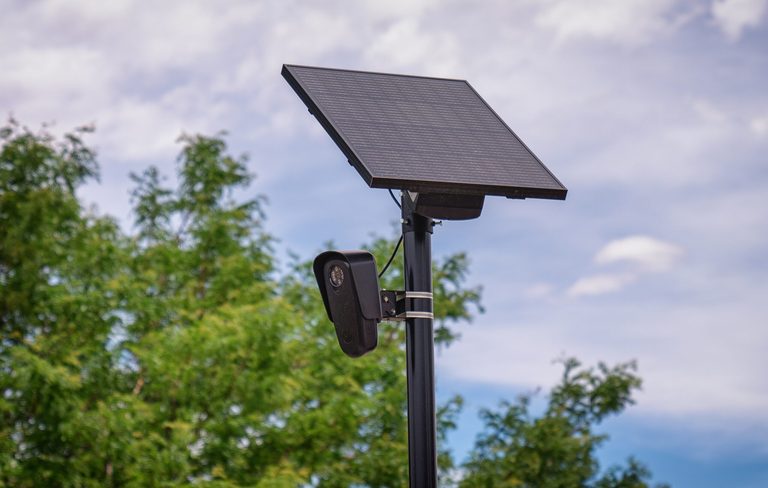
At the Oct. 27 Pinellas County Board of Commissioners meeting, Sheriff Bob Gualtieri warned that a resolution to remove Flock automated license‑plate‑reader (ALPR) cameras from county‑owned land would not stop the technology—it would merely shift the cameras to a new location.
Commissioners consider a resolution
Commissioner Vince Nowicki introduced a resolution that would restrict the placement of ALPR cameras on county‑controlled property and rights‑of‑way. Commissioner Chris Latvala asked the sheriff how he would respond if the measure passed.
“I would just move them,” Gualtieri replied. “The other thing I would say to that is, you probably have to start with your own.” He added that the county currently operates just under 300 fixed ALPR cameras, plus the license‑plate‑reading equipment installed in each of the Sheriff’s Office’s 560 patrol cars.
Sheriff frames the issue as a public‑safety tool
Gualtieri stressed that the cameras are an investigative asset, not a privacy nightmare. “All this is doing is squeezing it from the left hand to the right,” he said, noting that the state’s own Department of Transportation recently moved its cameras after Governor Ron DeSantis ordered a removal from Florida DOT rights‑of‑way.
When pressed about the effectiveness of DeSantis’ statewide removal, Latvala noted that the governor’s announcement had not yet shown clear results. Gualtieri responded, “If you all pass an ordinance, or revoke the permits through a resolution, I’ll move them off the property, but I’ll just move them somewhere else.”
Local concerns and recent incidents
Flock cameras have drawn criticism across the Tampa Bay area. In St. Peterson, the grassroots group DeFlock St. Pete has urged the City Council to end its agreement with Flock Safety and take down roughly 50 cameras installed citywide. The group argues that the technology collects location data from motorists who are not suspected of wrongdoing and that the data could be accessed by other agencies.
Those concerns were amplified in September when a former Pinellas County deputy was arrested for allegedly using an ALPR database hundreds of times to track a private individual. While Gualtieri defended the overall system, he acknowledged that some agencies have operated ALPRs without adequate auditing.
“We’re cleaning it up,” he said. “It’s evolving and getting better … legislature should incorporate all these best practices.” The sheriff pledged to support any state legislation that addresses ALPR use, including broader restrictions.
Other counties take action
Pinellas is not alone in grappling with the technology. Pasco County terminated its contract with Flock Safety in September, and St. Johns County commissioners voted earlier this month to remove ALPRs from county rights‑of‑way, though the devices were later relocated.
Latvala expressed a preference for waiting on state action rather than passing a county‑specific ordinance. “If the legislature doesn’t work, we can return to this in May – after the fact,” he said.
What’s next?
Gualtieri said he expects the Florida Legislature to prioritize a bill on ALPR best practices in the upcoming session. He affirmed the sheriff’s office will comply with any new state rules while continuing to use the technology to protect Pinellas residents.
Original reporting: St. Pete Catalyst — read the source article.