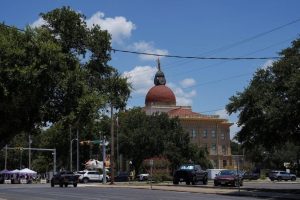
On August 12, the Pierce Township Board of Trustees voted to end its automated license‑plate reader (ALPR) program with Flock Safety a month ahead of schedule. The decision follows a request from Police Chief Paul Broxterman Jr. after residents voiced concerns about privacy, cost and the placement of cameras near a local house of worship.
Background of the program
Pierce Township first learned about Flock Safety in 2022 when a neighboring police department used the technology to help solve a bank robbery. The township piloted two cameras in 2023 to evaluate their usefulness for local law enforcement. In 2024, a grant from the Ohio Office of Criminal Justice Services funded an additional eight cameras, which were installed at major intersections near the township’s entrance and exit.
Chief Broxterman said the ALPR system has assisted police in recovering stolen vehicles and even helped solve a recent breaking‑and‑enter case by logging license plates, makes and models. “The cameras were being funded by a grant,” he noted, “but due to the public’s negative connotation with the cameras, we decided to end the program one month early and not renew the lease.”
Financial and practical reasons for termination
Two of the Flock cameras were vandalized this summer, leaving the township with a $1,600 replacement bill. With the grant period ending, officials faced a decision: spend roughly $26,000 to renew the contract in October or discontinue the program. The board chose the latter, citing both the unexpected repair costs and the broader community backlash.
Faith community raises privacy alarms
Members of Bridgeway Church, a local congregation, were among the most vocal opponents. They objected after Union Township placed an Axon camera—using similar technology—directly facing the church’s parking lot entrance. “It shouldn’t be placed facing the entrance to a house of worship,” said church member Matt Cool. “Whether it’s a mosque, a temple or a church, we’ve seen historically how that can be abused.”
Another church attendee, Cook, warned that constant scanning of license plates gathers extensive data on ordinary Americans, potentially infringing on personal liberty.
National context and law‑enforcement safeguards
Across the United States, ALPR technology has drawn increasing scrutiny. While the system can help locate stolen vehicles, wanted persons and investigate crimes, it also raises privacy questions. Data from these cameras are shared among agencies, and all searches are logged for review.
Instances of misuse have occurred. In Indiana, a Jackson County sheriff’s deputy was arrested after repeatedly searching the same registration plate more than 2,000 times over eight months. Chief Broxterman acknowledged that “bad actors in law enforcement should face appropriate disciplinary measures,” but emphasized that such cases are rare compared to the thousands of officers who use the technology responsibly.
Regional trend of reevaluating surveillance
Pierce Township is not alone. At least half a dozen Greater Cincinnati communities have paused or ended their ALPR programs this summer, citing similar privacy concerns. Anderson Township Trustee Tom Hodges announced a pause on his township’s Flock contract, calling for “meaningful regulation, clear limits, and strong safeguards” for the rapidly evolving technology.
Other local agencies are taking a transparency approach. Delhi Township Police recently launched an online portal detailing how their Flock cameras operate, the department’s policies and statistics on data collected.
What’s next for Pierce Township?
With the contract terminated, the township will remove the remaining cameras in the coming weeks. Officials say they will continue to rely on traditional policing methods while monitoring legislative developments that could provide clearer guidelines for surveillance technology. The board’s action reflects a growing desire among Ohio residents to balance public safety with the constitutional right to privacy.
Original reporting: WLWT Cincinnati — read the source article.