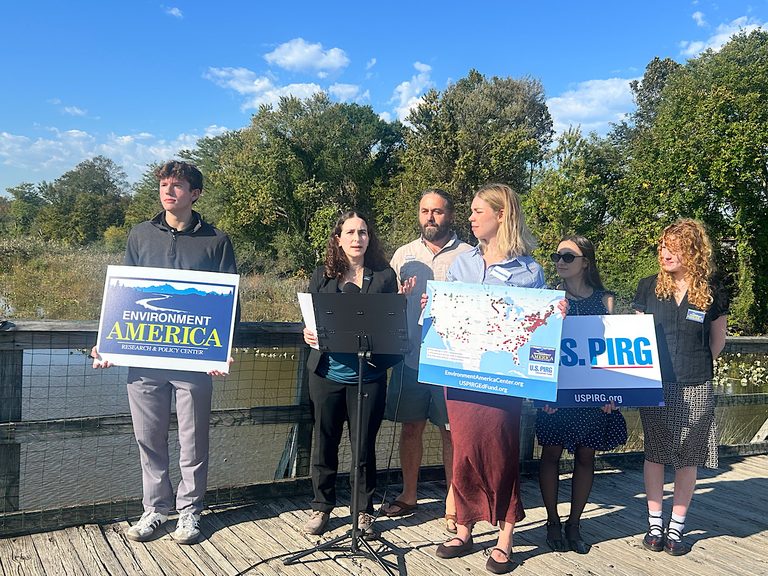
Washington residents face renewed environmental concerns after a new report revealed that per- and polyfluoroalkyl substances (PFAS) and microplastics were present in every water sample taken from the Anacostia River and Kingman Lake. According to Washington Informer, the Environment America Research and Policy Center tested the two waterways in October and found PFAS in 100% of the samples, with seven distinct compounds detected in the Anacostia River and nine in Kingman Lake.
PFAS, often called “forever chemicals,” are synthetic compounds that break down very slowly, allowing them to accumulate in water, wildlife and the human body. The report notes that long‑term exposure is linked to immune system suppression, reproductive and developmental effects, and increased risk of breast, kidney, testicular, and respiratory cancers. Lisa Frank, executive director of Environment America, told The Informer that the more testing that is done, the more PFAS are discovered, underscoring the need to stop using these chemicals.
In addition to PFAS, the study found microplastics in 100% of the tested waterways within the Chesapeake Bay watershed, including the Anacostia River. Microplastics—plastic fragments smaller than five millimeters—pose a threat because they can be ingested by aquatic life, enter the food web, and potentially reach human tissues. Brian Brooks, vice president of advocacy for the American Bird Conservancy, warned that “we can no longer treat plastic pollution as an isolated problem if every water sample contains microplastics.”
Local advocates are urging immediate action. Anacostia Riverkeeper Trey Sherard called for an outright ban on PFAS and related plastics, describing them as “synthetic, carcinogenic… causing reproductive harm” and urging that production cease. Groundwork Anacostia River D.C. (GWARD) executive director Dr. Dennis Chestnut emphasized the river’s importance to the broader Potomac watershed, which supplies the city’s drinking water. He noted that the Anacostia’s recent “C‑” rating and 71% score on the 2026 State of the River Report Card represent its healthiest period in three decades, but that momentum could be lost without continued remediation.
Experts highlight that the EPA currently monitors only about 114 of the roughly 14,735 known PFAS compounds, leaving the vast majority untracked. Both PFAS and microplastics can adhere to each other, increasing the likelihood they enter the food chain. The report recommends expanding monitoring programs, securing federal and local funding, and pursuing bans on PFAS‑containing consumer products such as non‑stick cookware, grease‑resistant packaging, and stain‑resistant fabrics.
What’s next: Environmental groups are urging the District’s Department of Energy and Environment to allocate additional resources for comprehensive water testing and to consider legislative measures that restrict PFAS use. Community volunteers with GWARD plan to continue litter‑trap maintenance and educational outreach throughout the summer, aiming to keep the Anacostia River’s recent health gains on track.
Sources: washingtoninformer.com