State Senate Democrats led by Sen. Carol Alvarado (D‑Houston) introduced a bill on Monday that would prohibit the Motor Vehicle Crime Prevention Authority from providing grants for automated license‑plate readers, commonly known as Flock cameras. The proposal is part of a broader effort this week to limit or ban the use of the controversial surveillance system throughout Texas.
Background on the funding and deployment
In 2023, Sen. Alvarado added a $1 annual fee to auto‑insurance policies to fund programs aimed at curbing catalytic converter theft. An investigation by The Texas Tribune later revealed that more than $30 million of that money was diverted to install at least 3,200 Flock cameras, part of an ambitious plan to blanket the state with the devices.
Alvarado said she was surprised to learn that the funds were being used for roadside cameras, a use that was never discussed when her insurance‑fee bill passed the Legislature with unanimous support from both chambers.
Details of the new legislation
The newly filed bill would bar the authority from offering financial assistance to cities, police departments, or the Texas Department of Public Safety for the purchase or operation of automated license‑plate readers. Democratic senators Roland Gutierrez, José Menéndez, and Taylor Rehmet co‑authored the measure.
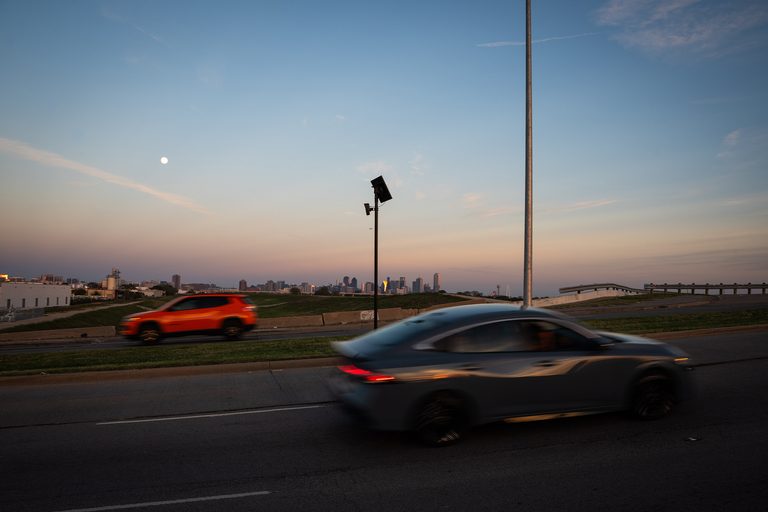
According to the bill, the authority also used the insurance fund for a $15.9 million contract intended to help the Department of Public Safety install more than 1,200 cameras. To date, 940 Flock cameras have been erected with those funds, creating a network that, as of June, was accessed on average once every four seconds by thousands of law‑enforcement agencies nationwide.
Current status and political context
Public sentiment toward the cameras has soured, and many municipalities have terminated contracts for hundreds of devices. A recent freeze on state funding, ordered by Gov. Greg Abbott after questions from the Tribune, prompted further cancellations.
Gov.-elect Gina Hinojosa, who campaigned on opposing the cameras, has indicated that a restoration of grants is unlikely. In a September interview, Hinojosa called the authority’s actions “egregious,” saying, “What should really happen is they should be taken down and taxpayers should get their money back for this fiasco.”
Related legislative efforts
Other bills filed this session address the broader use of automated license‑plate readers. Rep. John Bucy (D‑Austin) introduced legislation to ban public agencies from using any such readers, while Rep. Mary González (D‑Clint) proposed requiring a warrant before law‑enforcement can conduct a search with a reader and clarifying public‑record status of the data.
Rep. Brian Harrison (R‑Midlothian) offered a bipartisan‑leaning alternative that also requires a warrant but limits camera use to investigations of violent crimes. Harrison filed similar measures in the two prior legislative sessions.
Implications for Texas law‑enforcement and privacy
If passed, the Alvarado‑led bill would significantly curtail the state’s ability to fund and expand the Flock network, reinforcing privacy protections for Texas motorists. Supporters argue that the move restores proper legislative oversight and respects taxpayers’ money, while opponents warn it could hamper law‑enforcement’s ability to combat serious crimes.
The debate underscores a growing tension in Texas between public‑safety technology and individual liberty—a tension that aligns with the values of many Texas families who cherish constitutional rights and responsible government.
Original reporting: Texas Tribune (HLL/CB) — read the source article.