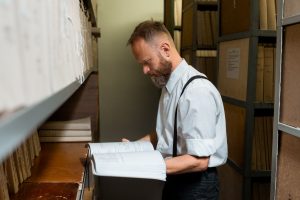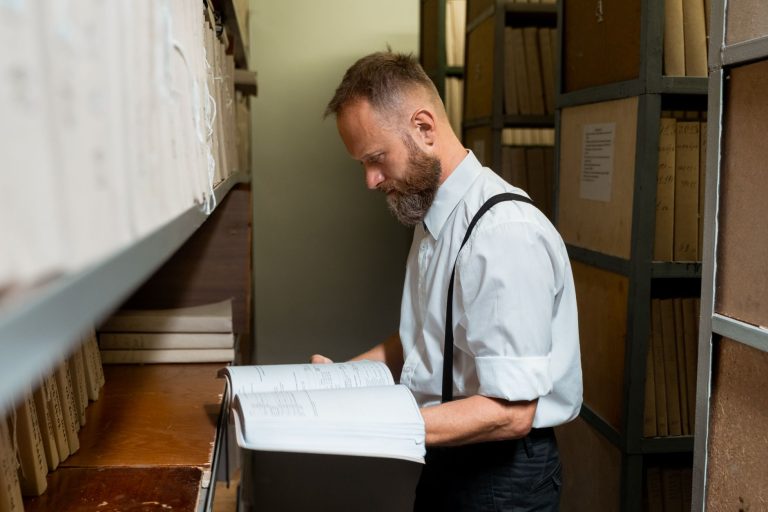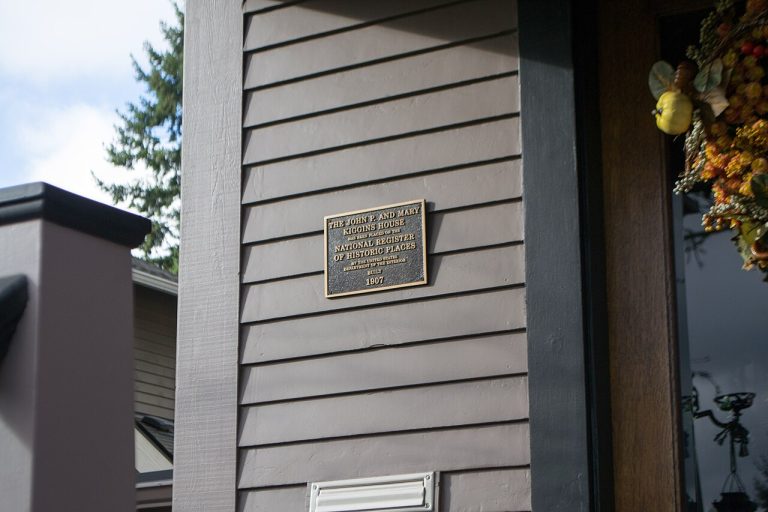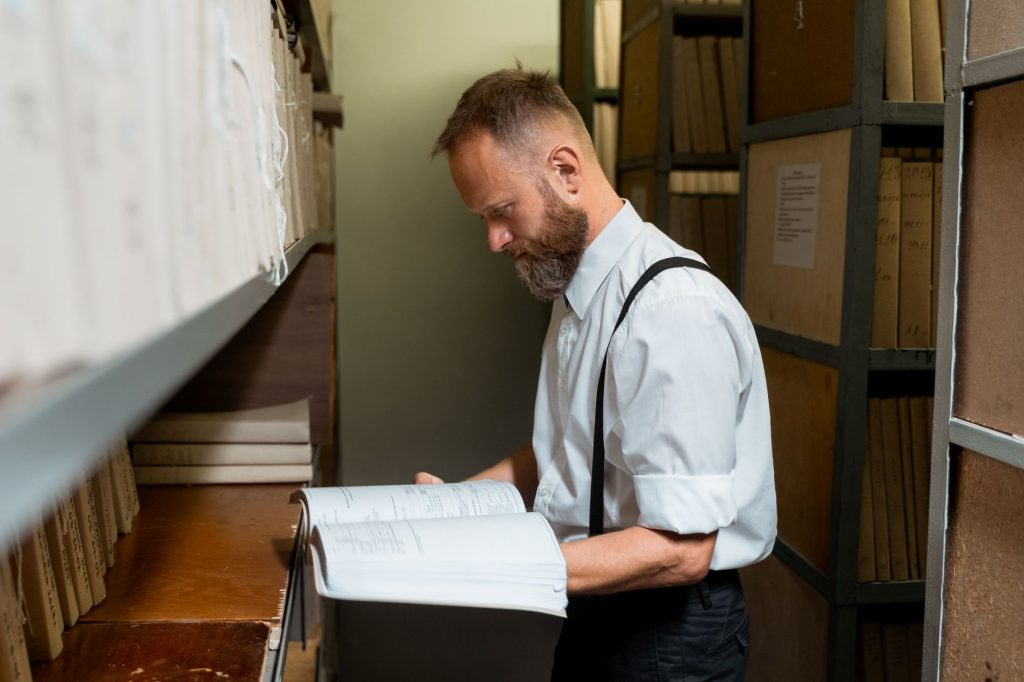
On a quiet Wednesday afternoon in early March, when the sidewalks along Hamilton Street are mostly empty and the wind cuts hard off the river, the Lehigh County Historical Society’s research library on Fifth Street draws the kind of visitors who come with a purpose. A retired schoolteacher spreads out a folder of photocopied deeds. A graduate student photographs naturalization records with her phone. A man in his sixties has driven down from Northampton County to find out exactly when his grandfather’s house was built.
The Scott Andrew Trexler II Memorial Library and Archives is not a flashy place. Its storefront on Fifth Street, just south of the old courthouse block, looks more like a law office than a cultural institution. But inside, the organization holds one of the most substantive local history collections in Pennsylvania’s Lehigh Valley — tens of thousands of photographs, land records dating to the colonial period, genealogical files, maps, church records, and manuscript collections covering more than three centuries of regional life.
What makes this worth knowing about is the access. Unlike larger archival institutions that require advance appointments weeks out or impose steep researcher fees, the Trexler Library operates on a walk-in basis during regular hours, Tuesday through Saturday, with a modest daily research fee for non-members — currently around eight dollars. Annual memberships start at thirty-five dollars and get used hard by the people who hold them. Staff researchers are present and genuinely helpful; this is not a place where you’re handed a call slip and left to figure things out alone.
The photographic collection alone justifies a visit. Thousands of images document Allentown and surrounding Lehigh County from the mid-nineteenth century onward — storefronts that no longer exist, mill workers at Bethlehem Steel’s feeder operations, street scenes from neighborhoods that look nothing like themselves today. Researchers can order prints or digital copies. The turnaround is reasonable and the prices are fair.
For anyone tracing Pennsylvania German ancestry — and in this corner of the state, that’s a significant portion of the population — the church records here are primary source material that simply doesn’t exist anywhere else in the same concentration. Baptismal registers, marriage records, and burial lists from Reformed, Lutheran, and Mennonite congregations go back well before American independence. The staff can often point researchers toward collections they didn’t know to ask for.
Programs and exhibitions rotate through the year. Lectures, often free or low-cost, bring in historians who know the material deeply rather than broadly. Past programs have covered subjects like the iron industry in the upper Lehigh Valley, the history of Allentown’s immigrant neighborhoods, and the county’s Civil War records. The society also publishes a quarterly journal that has been running continuously for over a century.
None of this is glamorous in the way a natural history museum or an interactive science center is glamorous. The appeal is entirely different — the specific, irreplaceable, slow pleasure of finding a document that settles a question no one else thought to ask. On that Wednesday afternoon, the man from Northampton County found what he came for. He sat with the record for a few minutes, made a note in a small spiral notebook, and thanked the librarian on his way out. The wind was still cutting hard outside. He didn’t seem to notice.